A Day on Kulen Mountain
This is what the work looks like. Not just classrooms or numbers, but real lives, real places, real distance between where these students start and where they could go. And slowly, piece by piece, we are building that bridge. Toward something bigger.
Leaving the whole bank debacle behind us, at least for a moment, we finally had a few small wins.
We got bureau chairs! YAY!
It sounds insignificant, but after weeks of working on plastic stools and tables, it felt luxurious. Sitting down at school, comfortably, for the first time, you don't think about discomfort until you experience the comfort of a chair with a proper backrest.
A few days later, we took the international exchange students up to Kulen Mountain.
We wanted them to see it for themselves. Not just hear about it, but understand where our students come from, where they grow up, what their daily reality looks like.
We picked up New York Bagels on the way, another odd but welcome comfort, and drove out of Siem Reap toward the mountain.
The road slowly turned from smooth asphalt into red dust and potholes. The higher we climbed, the quieter it got. The air changed too, cooler, heavier, carrying the smell of earth and trees.
We talked the entire way up. About the project, about the students, about why any of this matters.
At one point, we stopped at the 1000 Lingas.
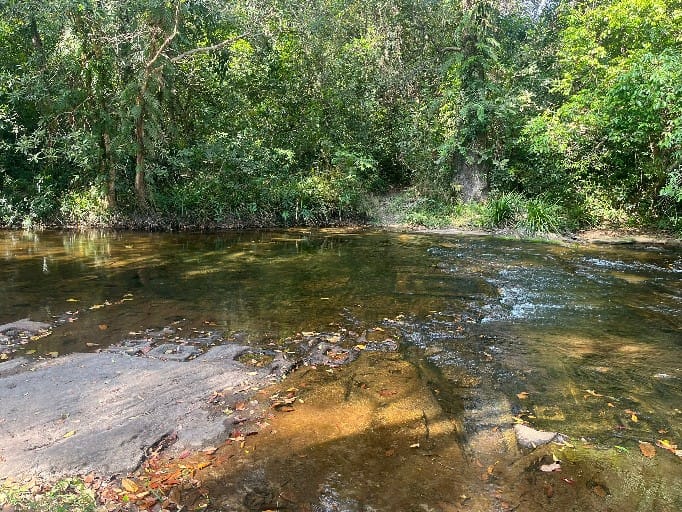
Carved into the riverbed, hundreds of ancient symbols, shaped by hand centuries ago. Water flowing gently over them, said to bless it with healing powers and fertility.
It’s quiet there, like the place holds something we as outsiders don’t fully understand.
As we walked along the river, we suddenly recognized a familiar face.
One of our students.
She had been given leave from school to celebrate the Chinese New Year with her family. She stood there with her brother, making an offering near the water.
When she saw us, her face lit up.
Smiles. Waves. 'Teacher, Teacher!' That small moment of recognition that makes everything feel connected.
We continued further, up toward the pagoda.
The stairs are bright green, with Naga-shaped railings curling alongside them. We took off our shoes at the top and stepped onto the warm stone.
Barefoot, slower, quieter.
We passed the linga, small places for offerings, incense burning softly in the corners. Then climbed higher to the reclining Buddha.
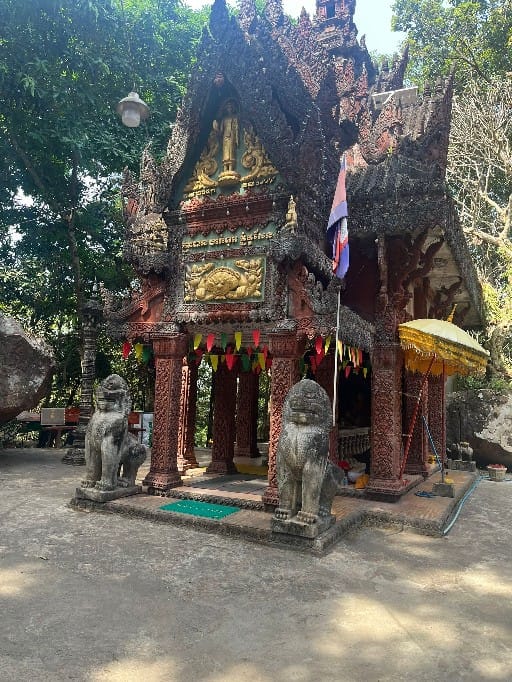
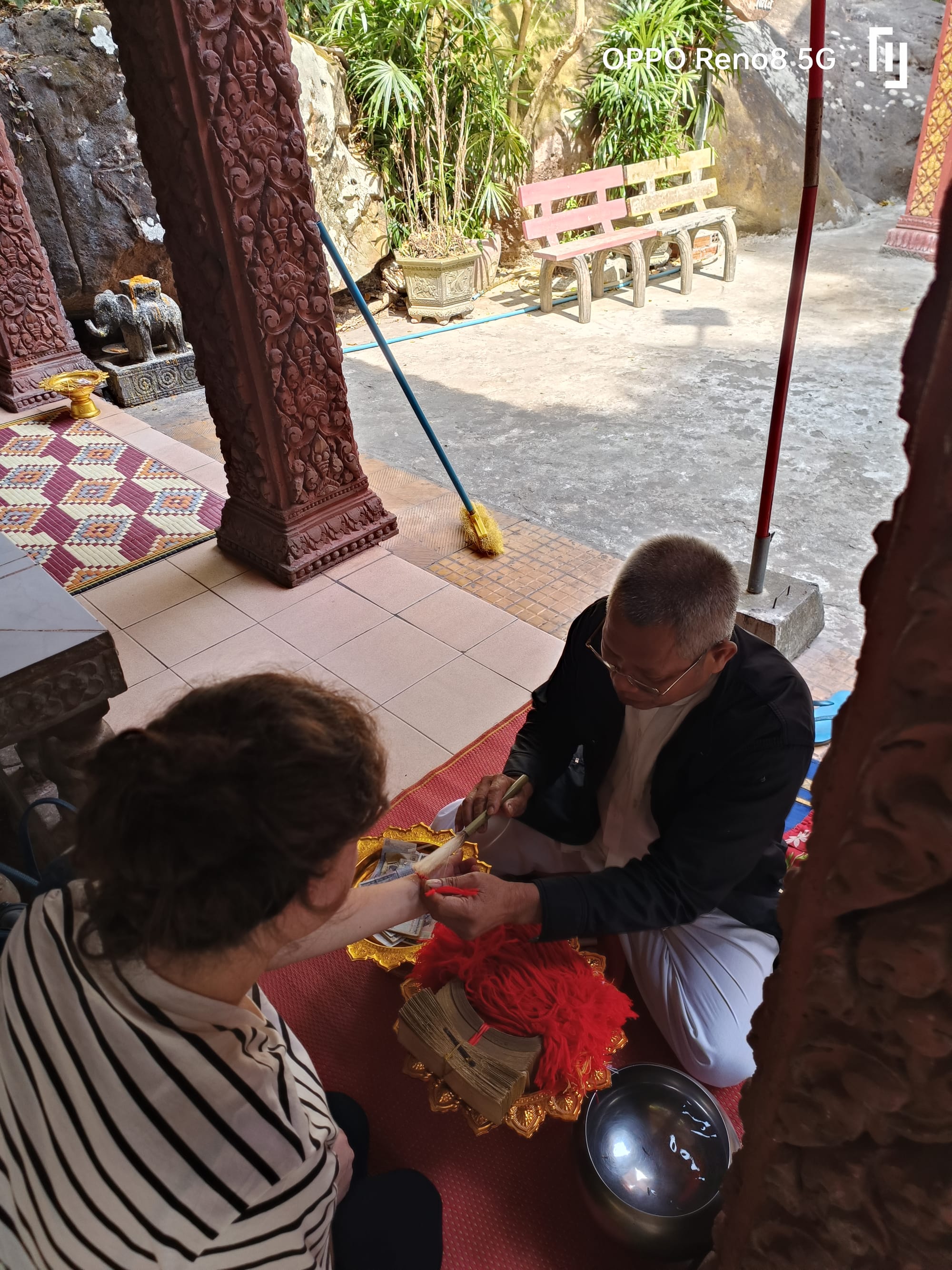
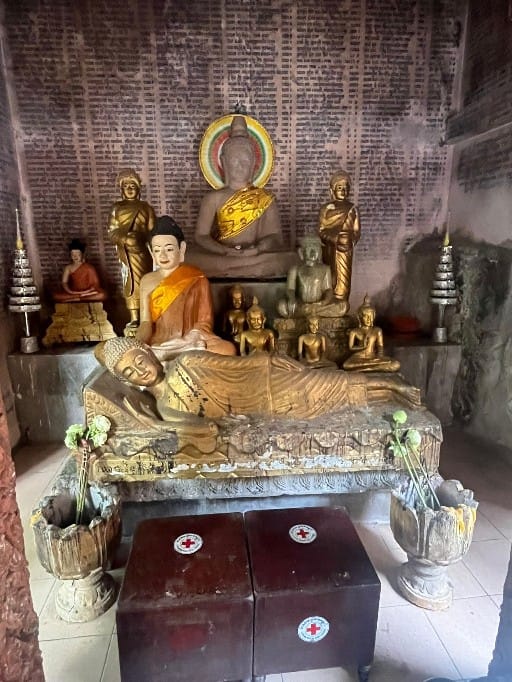
Three gongs as we entered to announce our arrival to the spirits.
A pause.
A walk around the statue.
Three gongs again as we left to announce our departure to the spirits.
There’s a rhythm to it. A respect. Even if you don’t fully understand it, you feel it.
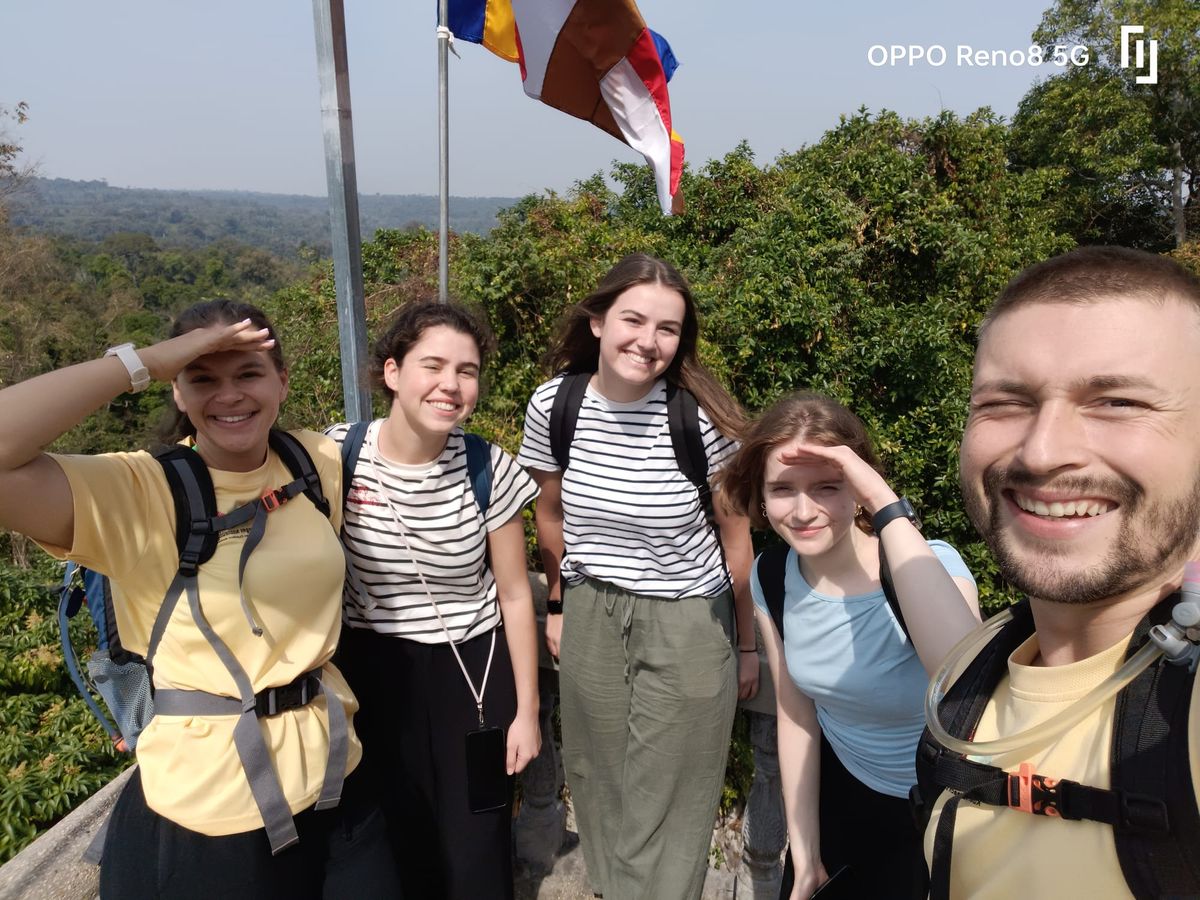
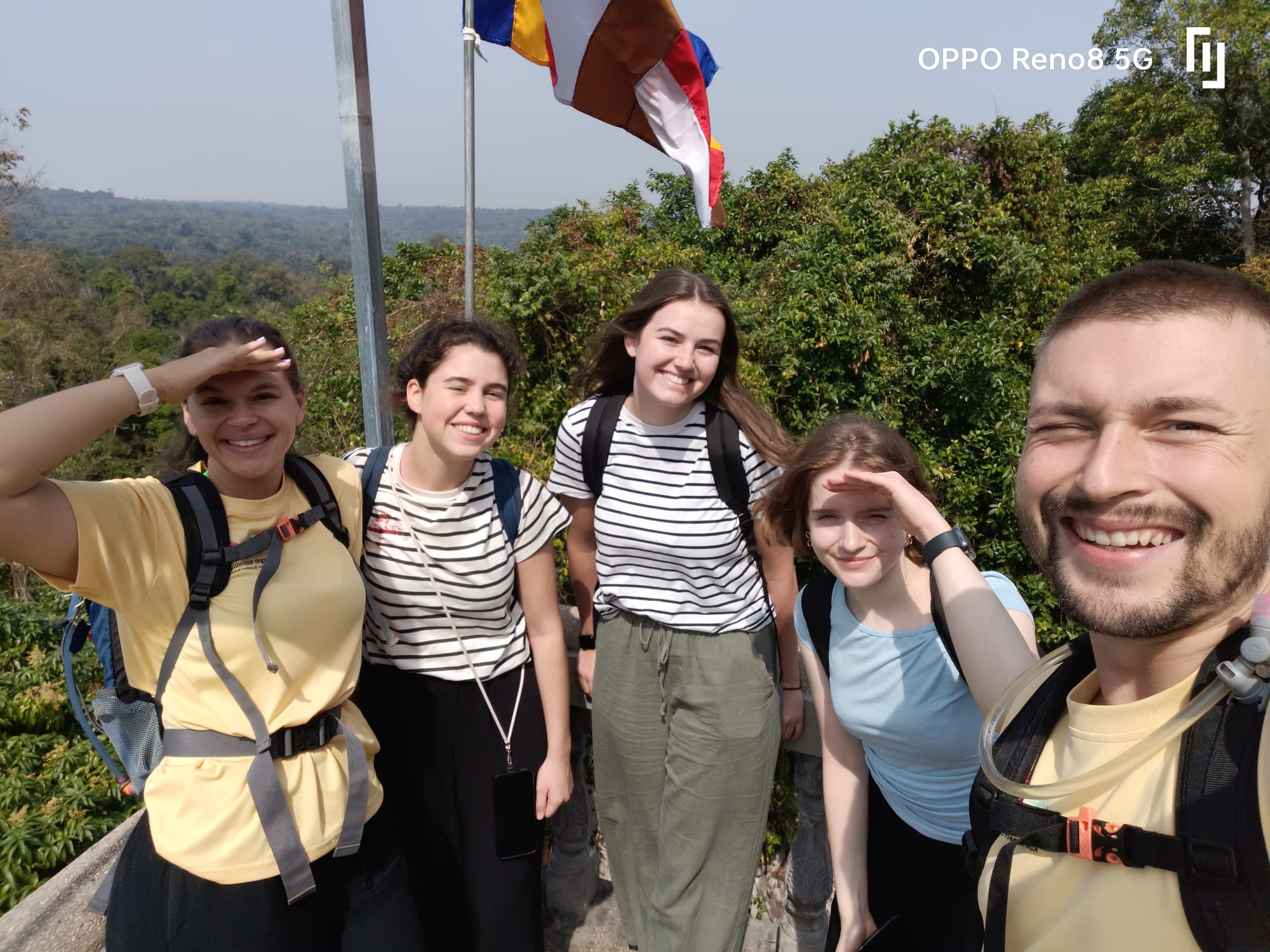
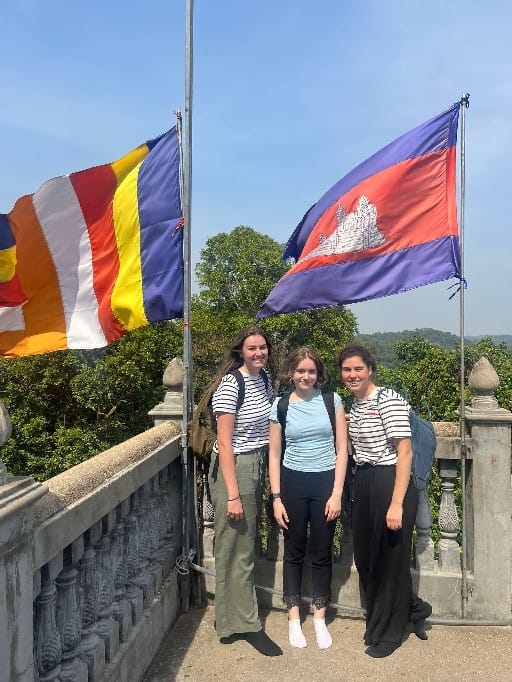
Back down the stairs, we stopped for a quick photoshoot overlooking the jungle, an endless stretch of green, broken only by the river cutting through it.
Then we walked to the waterfall.
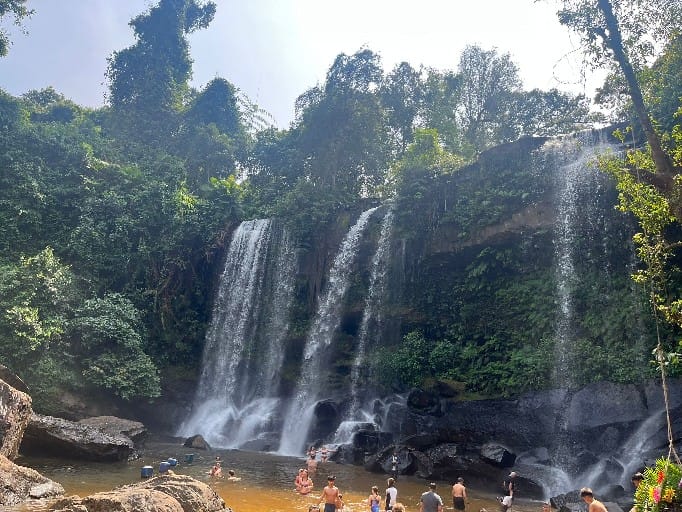
The first indication of the water cascading down are the many butterflies.
Then the sound hits you before you see it.
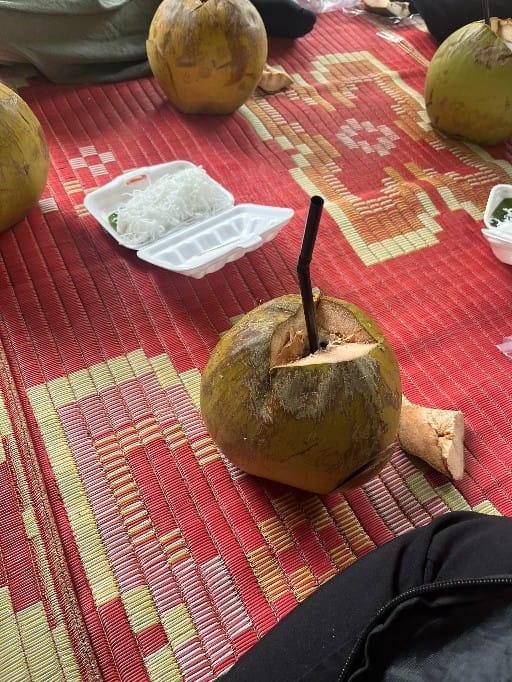
We sat down there for lunch. Bagels, coconuts, laughter.
For the international students, it was their first time drinking straight from a coconut. Slight confusion, then smiles.
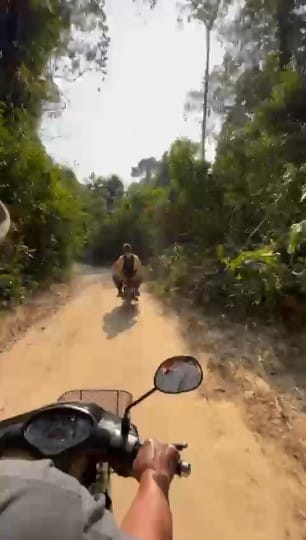
From there, Mao picked us up on his motorbike, followed by a small group of his friends.
And just like that, we were off again.
Driving through the jungle, red dust trailing behind us, trees closing in on both sides.
The roads were surprisingly good that day, rare for this area, and before long, we arrived in Popel.
A small, isolated village, deep in the jungle.
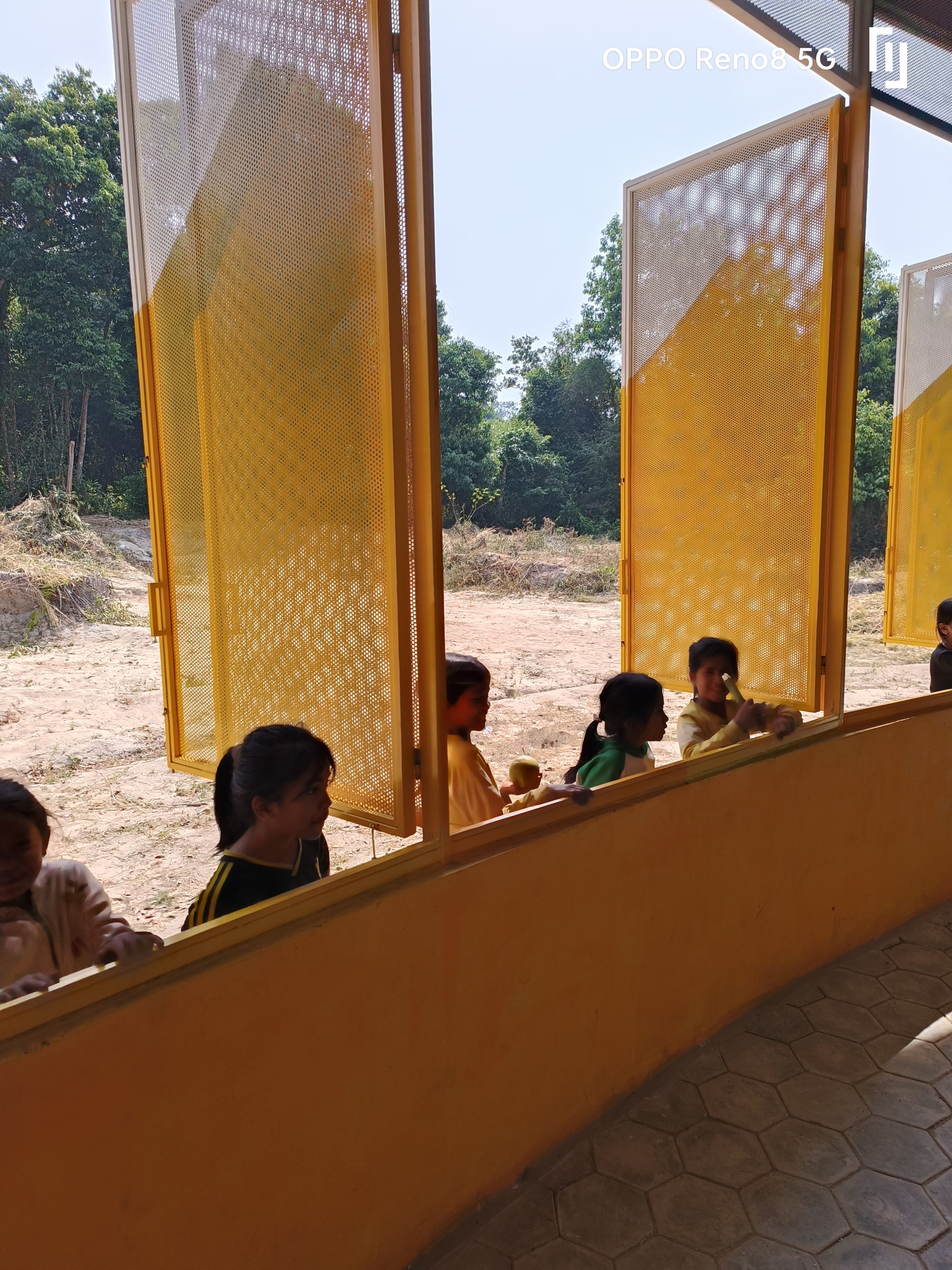
The moment we arrived at the primary school, we were surrounded.
Children running toward us. Smiling and waving.
And then something else.
A sea of yellow.
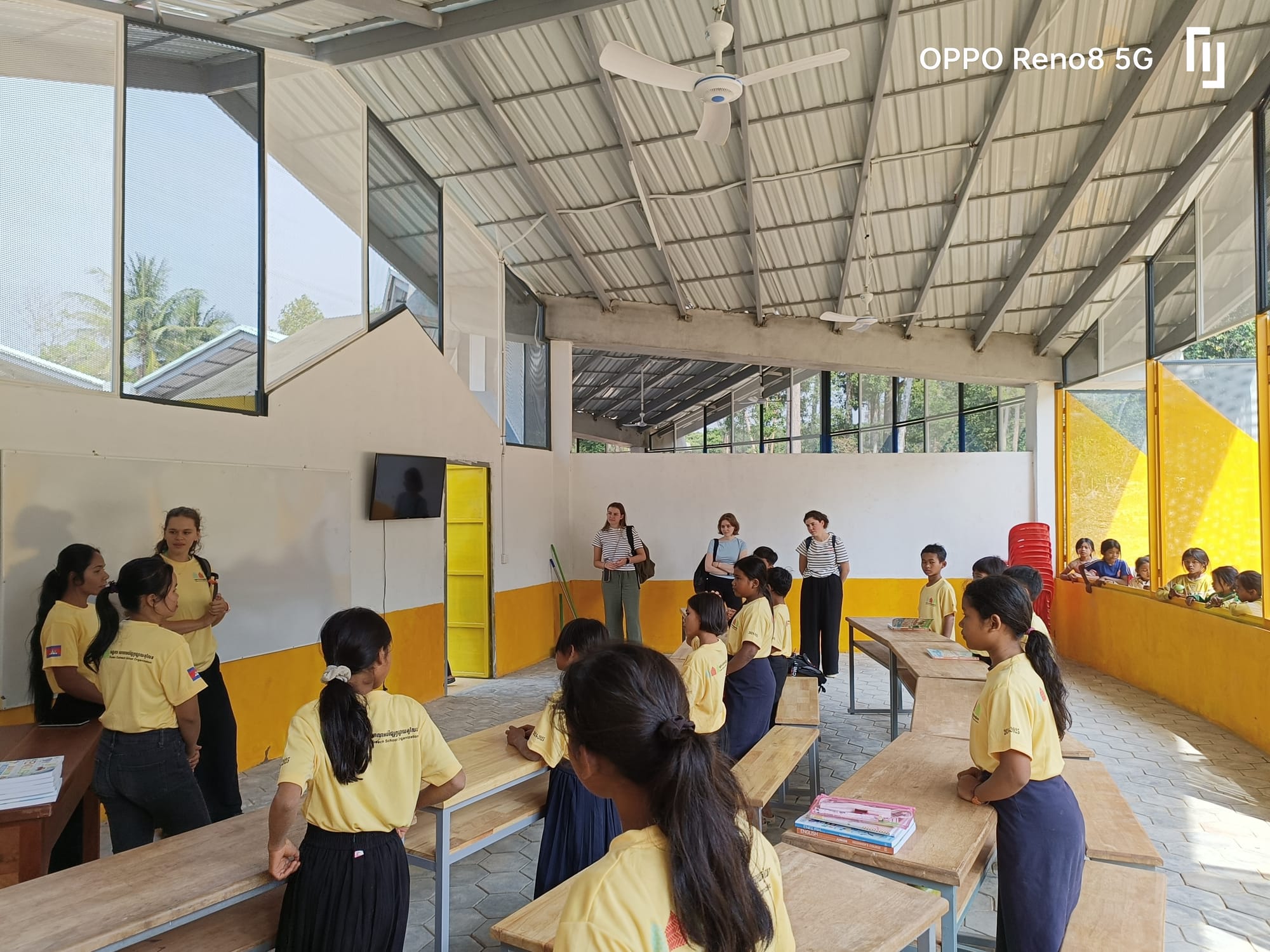
All the students wearing their Kulen Outreach T-shirts, standing proudly in front of the learning centre.
For the international teachers, it was a moment of disbelief.
A modern education centre. In the middle of the jungle.
We gave them a tour of the building. The classrooms. Introduced the team.
A quick meeting.
Then back to practical things.
I installed the DVD players, essential here. Without internet, this is how teachers bring English into the classroom. Voices, stories, sounds from outside the mountain.
Before leaving, we stopped by Ro’s family.
We showed her parents photos of her, her smile, her progress.
Her mother laughed, full of pride.
Her father didn’t say much, but his eyes sparkled.
By the time we made our way back, everyone was exhausted.
We returned to the car waiting in the larger town and stopped once more, this time at a cliff overlooking the jungle.
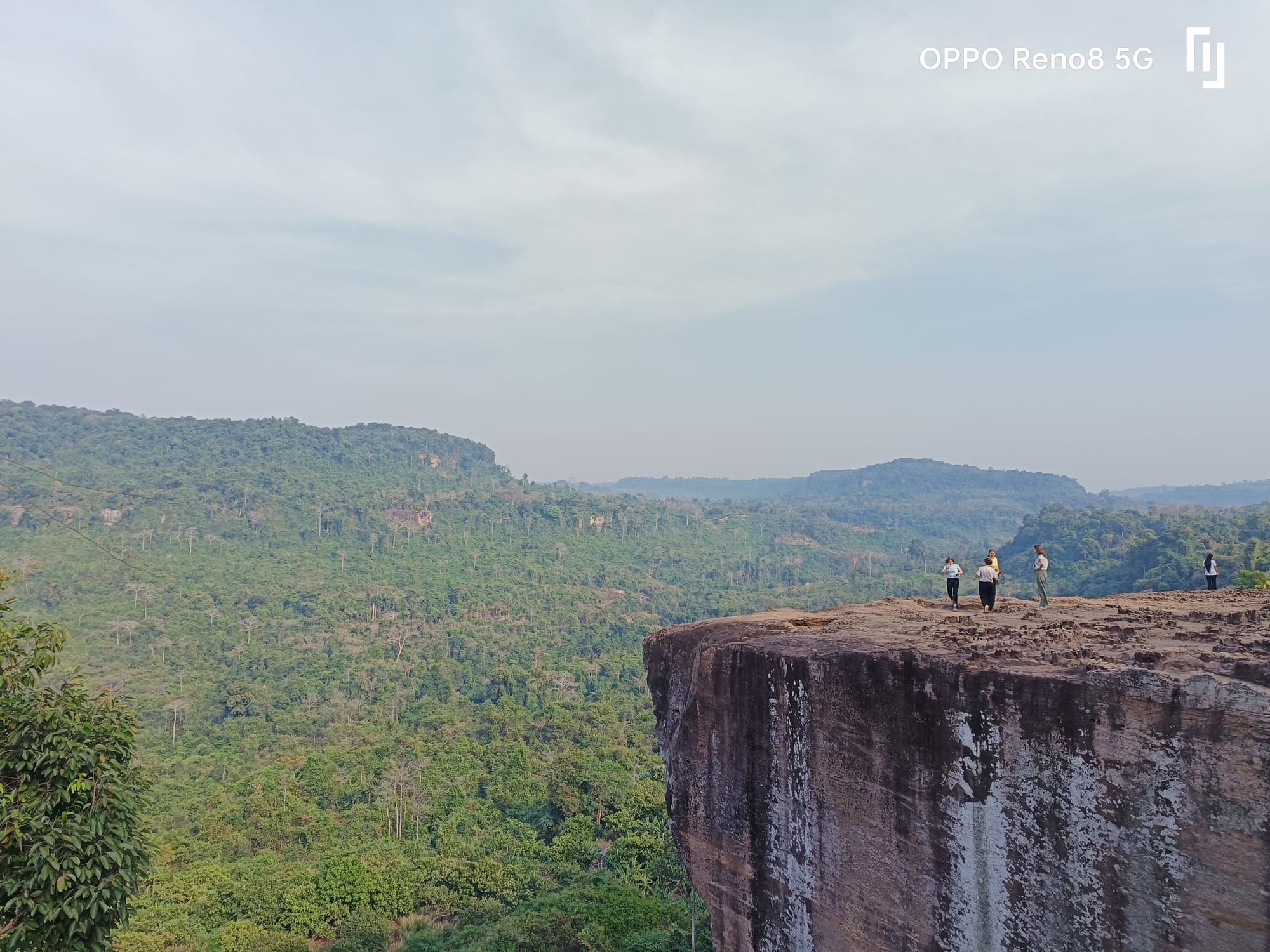
Endless green. The light softening as the sun was setting.
In the car, the conversations slowed down. People processing what they had just seen.
The international teachers were quiet at first.
Then questions. Reflections. Disbelief turning into understanding.
Back in Siem Reap, we had dinner together.
This is what the work looks like.
Not just classrooms or numbers, but real lives, real places, real distance between where these students start and where they could go.
And slowly, piece by piece, we are building that bridge.
Toward something bigger:
A full, quality education from first grade to college graduation for the most isolated children in Cambodia.