Eagles and yaks
An eagle circled high above us, wings spread wide against the blue sky. For the first time, we saw true thick-coated, slow-moving yaks. Grazing as calm giants on the grass. Their bells clinked softly as they moved, the sound oddly peaceful in the vast silence.

“The cold never bothered the mountain; it tests those who dare to climb it.”
— Nepali proverb
I slept horribly in Tengboche, even though I was exhausted. The cold seemed to creep through every crack in the wooden walls. Around two in the morning, I gave up trying to ignore my bladder and climbed out of my sleeping bag—the air bit instantly at my face, and the lack of oxygen made me gasp for air after merely standing up.
I opened the door as quietly as I could and stepped into the dark corridor. It was pitch-black except for the faint glow of the moon through a narrow window. The floorboards creaked under my socks. The porters were snoring loudly in the room next door.
I climbed the narrow wooden stairs, squinting each time it creaked, hoping not to wake anyone, and pushed open the door to the toilet area. The smell hit me immediately; sharp, stale, and overwhelming. My eyes watered. The air was icy and damp, and my breath came out in clouds. I rushed through it, half-gagging, and escaped back into the corridor, desperate for the faint warmth of my room.
But when I slid back into my sleeping bag, the zipper gave way. It had happened before during the trek, but this time, no matter how I tugged or fiddled, I couldn’t fix it. The last bit of warmth I’d trapped inside slipped away fast, replaced by a creeping chill that settled deep in my bones.
Through the thin curtains, I could see a white mountain peak glowing in the moonlight. Silent, impossibly large, ever-present. It stood there like a guardian in the darkness.
Eventually, shivering and half-panicked, I managed to fix the zipper. But the warmth didn’t return easily. My hands and feet stayed numb, and sleep never came back. Around 5:30, I gave up. I reached for my e-reader, reading beneath the soft hum of wind outside, watching the sky shift from black to deep blue. As dawn broke, the peaks turned gold, one by one, kissed by the first light of day.
At 6:30, the alarm rang, though I’d been awake for hours. We went through the familiar ritual: a quick bathroom trip, packing the duffel, layering on warm clothes, leaving the bag for the porters, and heading down for breakfast. Steam rose from our mugs as we huddled near the table, the smell of fried eggs and tea mingling with cold mountain air.
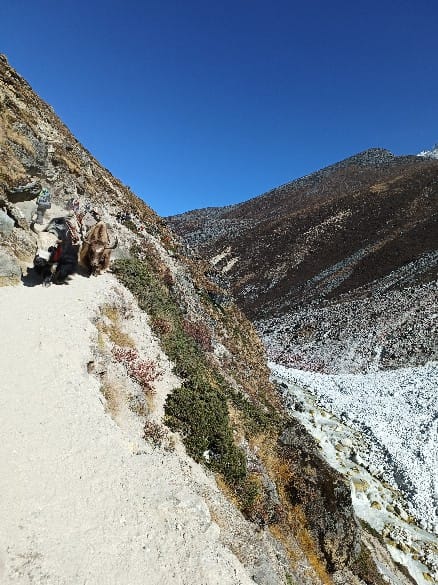
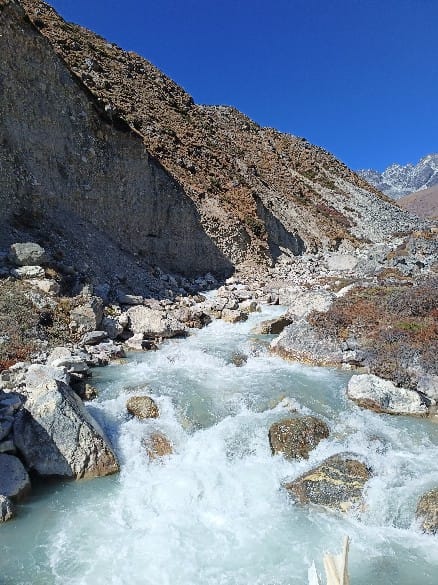
We started the day’s hike by descending toward the river, the path winding gently downhill at first. The river below roared with the force of melting glaciers, silver threads snaking through the rocky valley. Unlike yesterday’s brutal climb, today’s trail was softer, kinder, giving us room to breathe, to look up, and to enjoy the views.
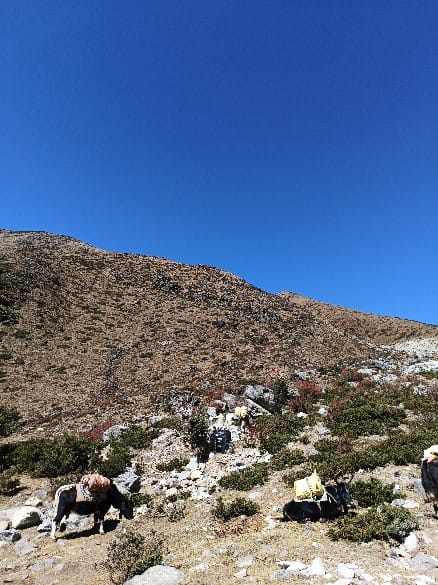
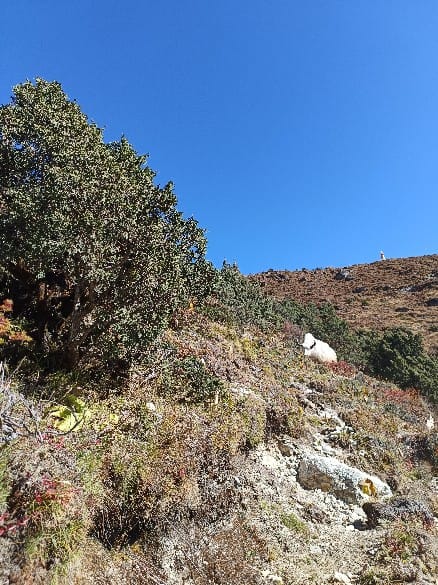
An eagle circled high above us, wings spread wide against the blue sky. For the first time, we saw true thick-coated, slow-moving yaks. Grazing as calm giants on the grass. Their bells clinked softly as they moved, the sound oddly peaceful in the vast silence.
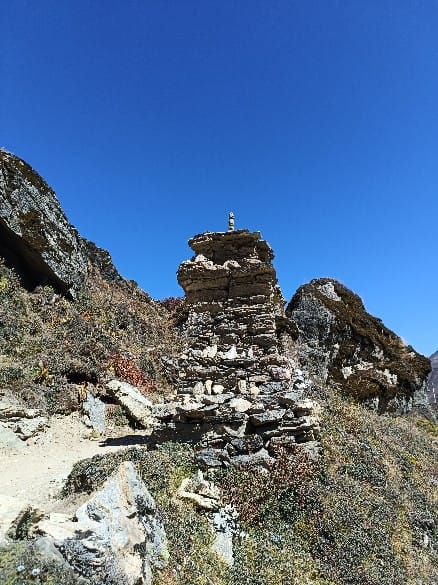
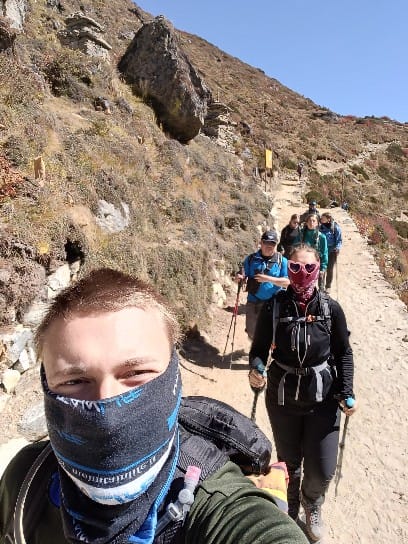
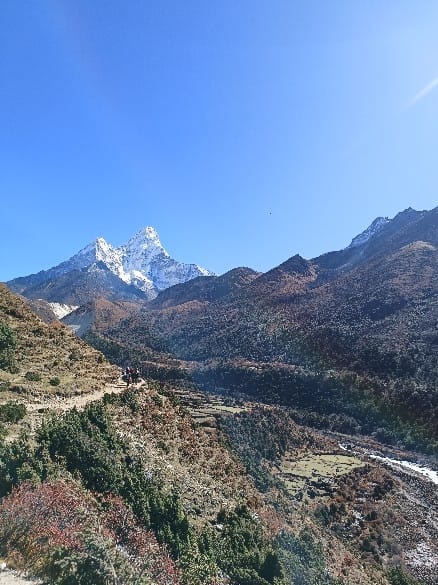
The trail unfolded steadily upward again. With every step, the landscape transformed. Tall trees faded into low shrubs, then into tough grass, and finally into bare rock and dust. The air grew thinner, colder. The mountains never left our sight; they towered above us like ancient walls, holding the clouds in their arms.
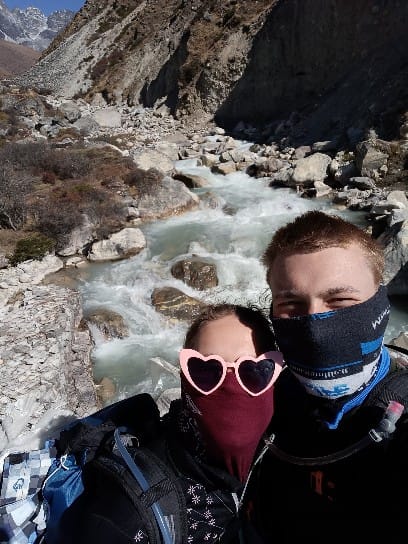
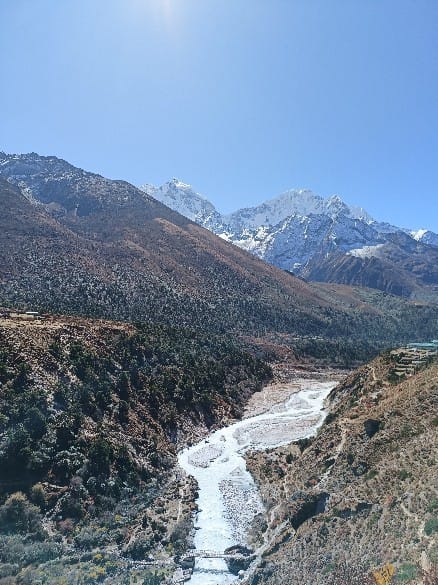
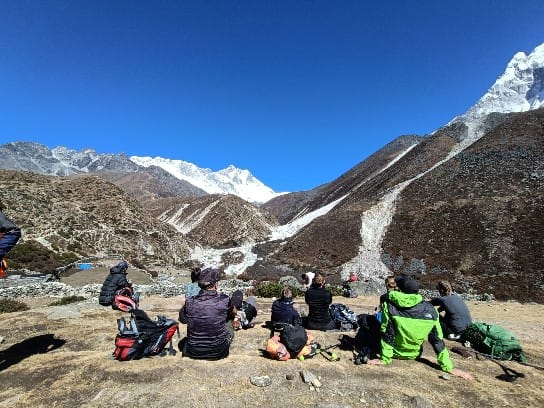
By 3 p.m., we reached our destination: a small village perched on a plateau, dotted with stone houses and prayer flags fluttering in the wind. We dropped our bags, changed into dry clothes, and gathered in the teahouse’s common room. Someone lit the stove, and soon we were all huddled around it, sipping tea and journaling in quiet contentment.
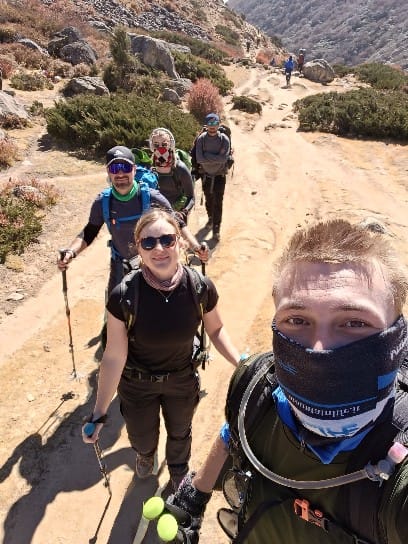
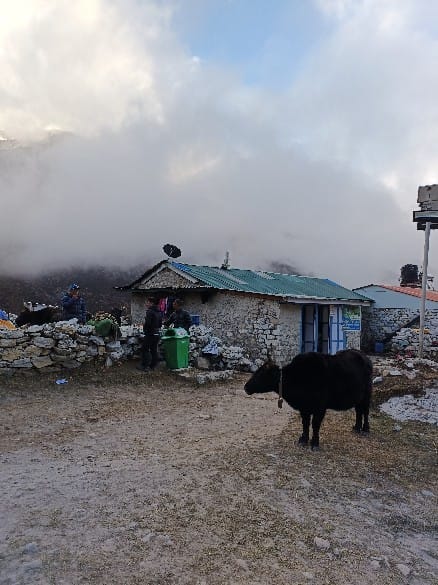
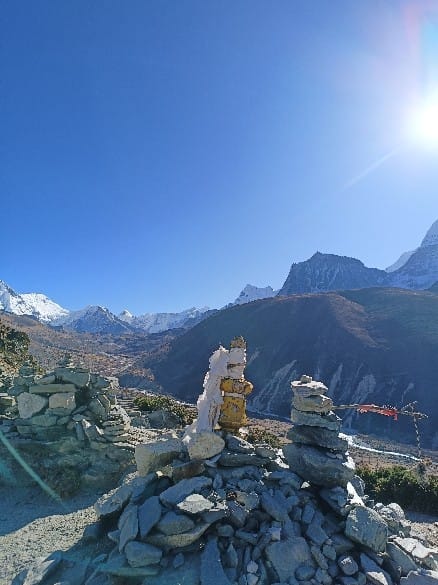
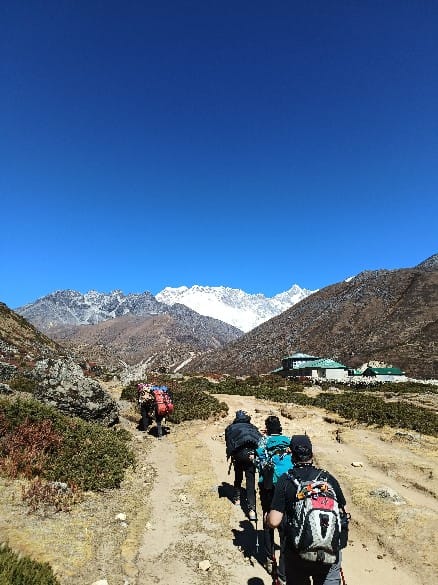
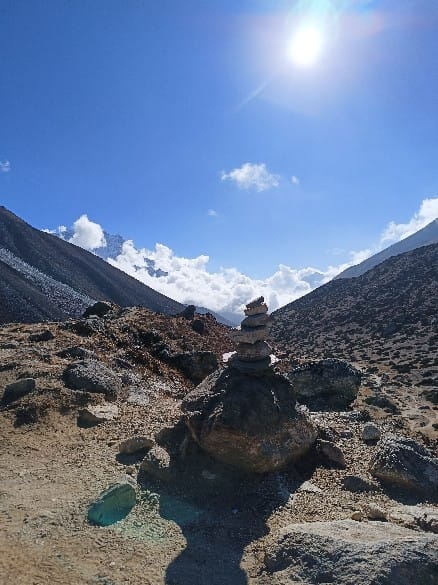
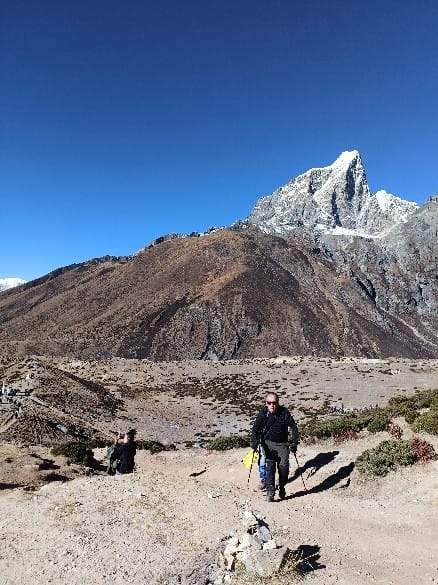
Later, Michael and I went for a short walk through the village. It was simple, beautiful in its starkness. One narrow stone road follows a thin stream through the center, bordered by low stone fences to keep the yaks out. Yaks roamed freely beyond the walls, their silhouettes dark against the pale hills. We heeded Bibek's warning not to get too close to the yaks as their horns are deadly.
When the cold began to bite again, we returned to the teahouse. We played card games and had Dhal Bhat for dinner, warm and filling. By the time darkness fell, the whole group had grown quiet, tired in that deep, satisfying way only a long day in the mountains can bring.
We went to bed early. The world outside was frozen and still, but the stars above Dingboche burned brighter than ever.