Hotel Everest
Today was what they call an acclimatization day—a day for our bodies to adapt to the thin mountain air at this high altitude.
“Climb the mountain not to plant your flag, but to embrace the challenge, enjoy the air and behold the view. Climb it so you can see the world, not so the world can see you.”
— David McCullough Jr.
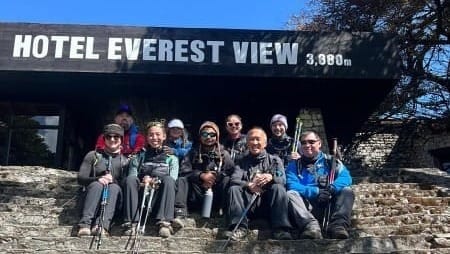
Today was what they call an acclimatization day—a day for our bodies to adapt to the thin mountain air at this high altitude. They cleverly didn't name it “rest-day”, since there is no time for rest in the Himalayas. Here, even rest means climbing higher. Our goal: a round trip from Namché Bazaar at 3,440 meters to Hotel Everest View, the highest hotel in the world, perched at 3,880 meters.
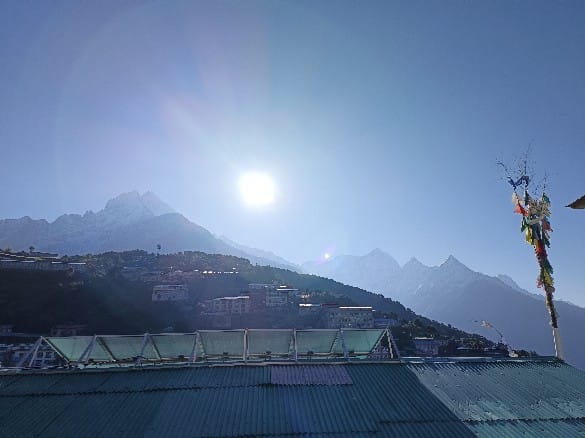
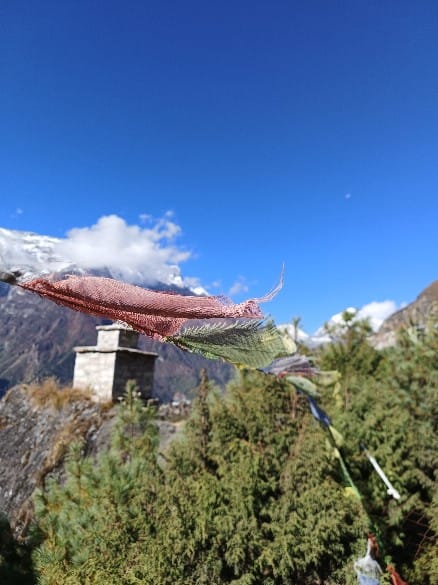
The morning greeted us with a sky of pure sapphire blue. The sun poured over the terraced roofs of Namché, lighting up the prayer flags that fluttered between lodges like strands of color against the snow-capped ridges. The air was crisp and dry. I felt the excitement taking over whilst waiting outside in the morning sun.
Before we even left the city, Alfred tripped over a loose rock and tumbled onto the path. For a brief moment, the chatter stopped, and hearts jumped. Luckily, he was fine, brushing off the dust with a laugh. Still, he took it slower after that, and somehow, that gentler pace made us all more aware of each step, each breath.
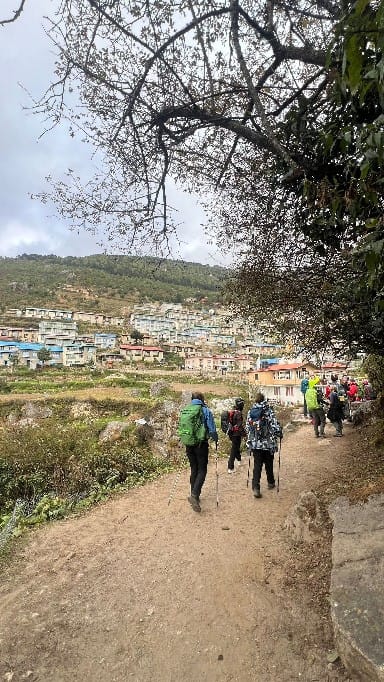
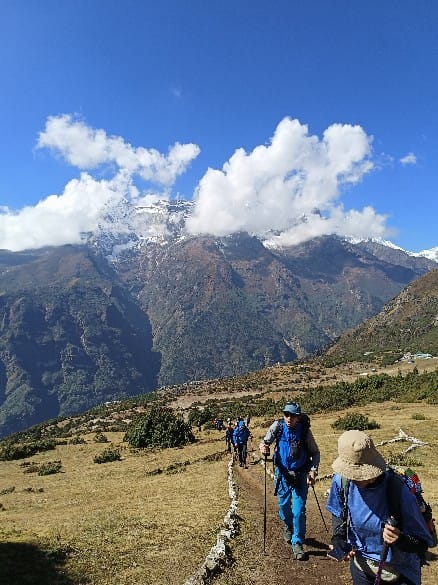
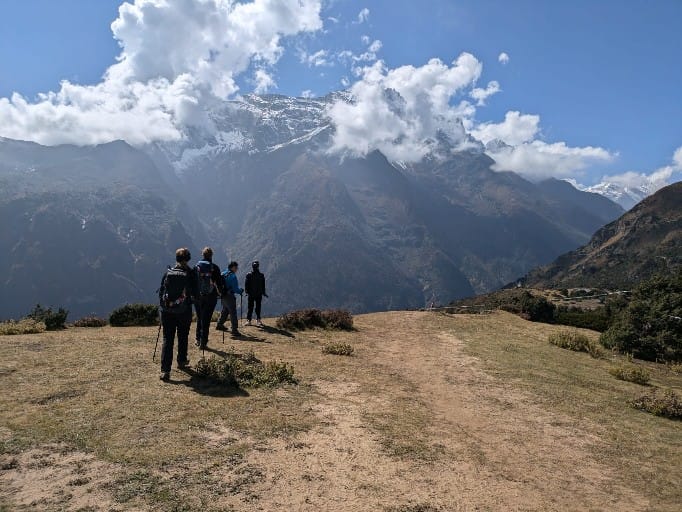
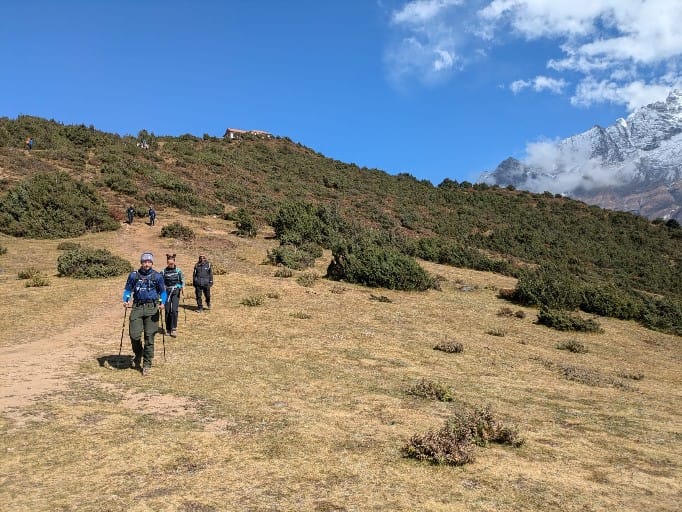
The trail wound sharply upward, a narrow dirt path carved into the side of the mountain. Yak trains jingled past us, bells echoing through the valley. Hikers queued along the track like pilgrims, each carrying their own rhythm of breath and exhaustion. The hike itself wasn’t too tricky; the lack of oxygen made it challenging. Every meter upward, it thinned a little more, until breathing became a conscious act.
Halfway up, a golden eagle glided silently across the green mountain plain, broad wings catching the sunlight as it circled in effortless freedom. A sight imprinted on my memory. An image of grace and power. Ultimate freedom.
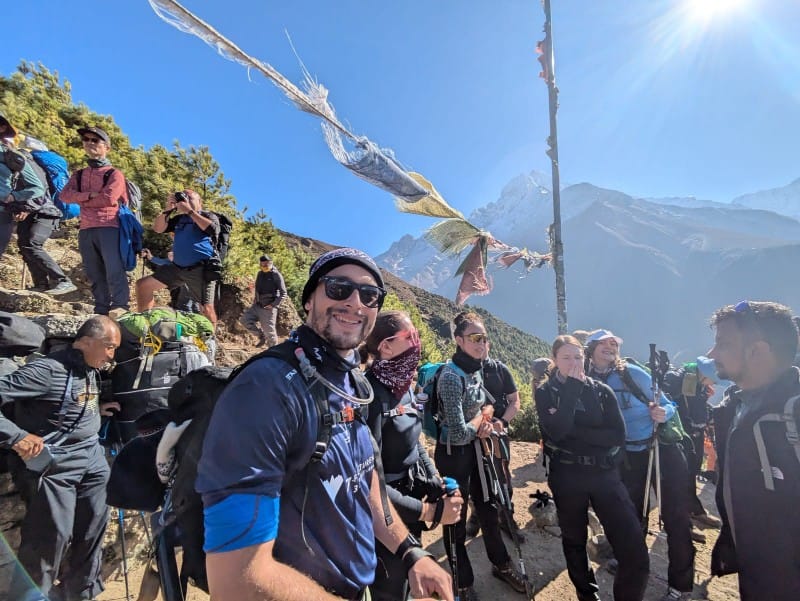
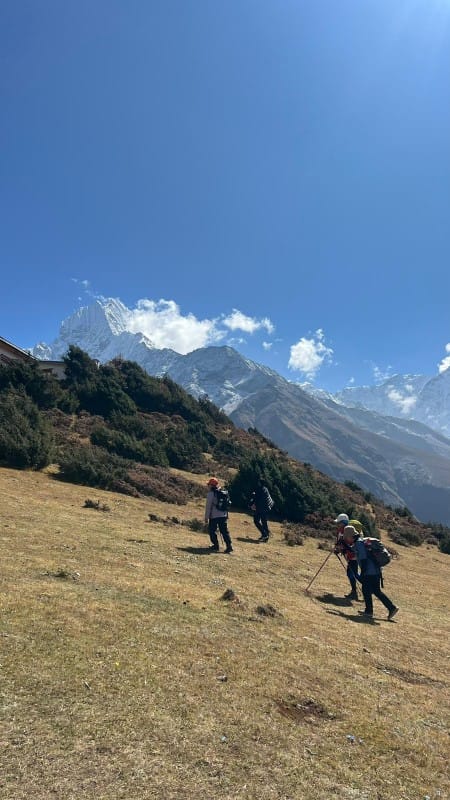
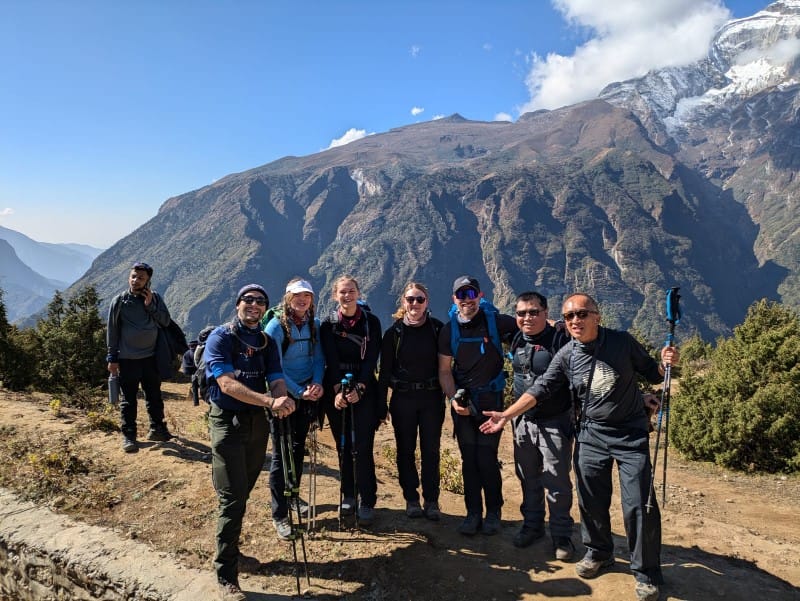
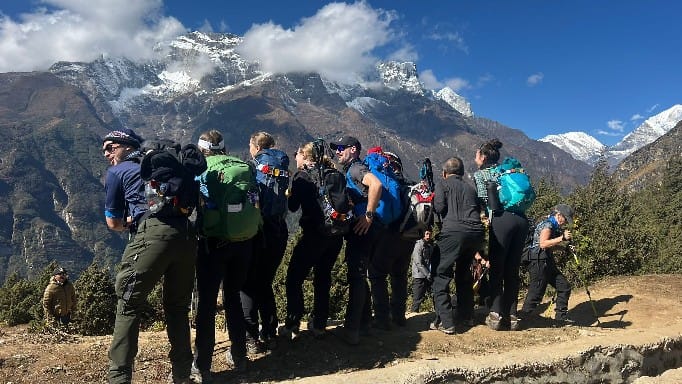
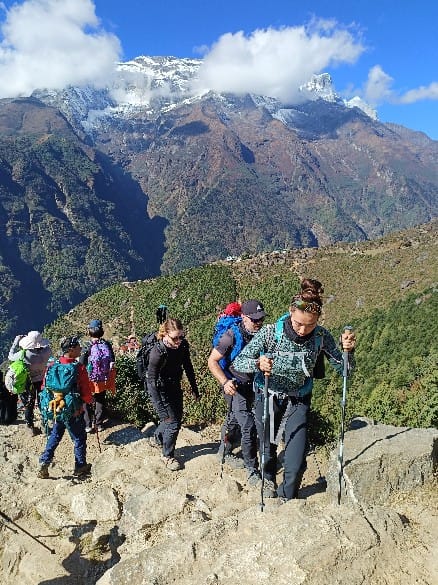
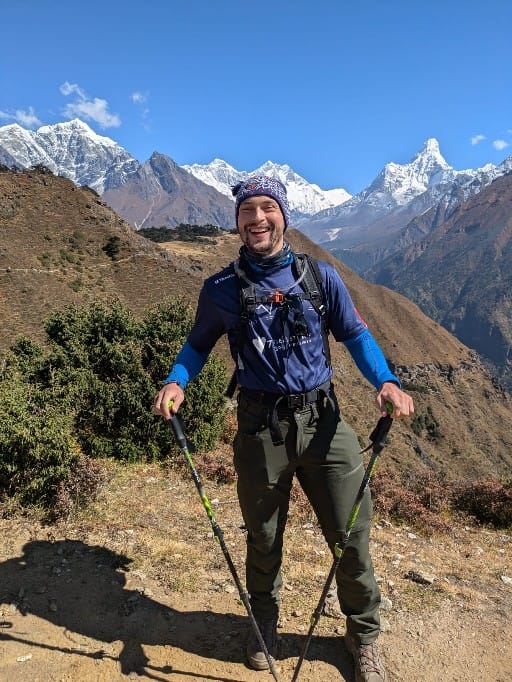
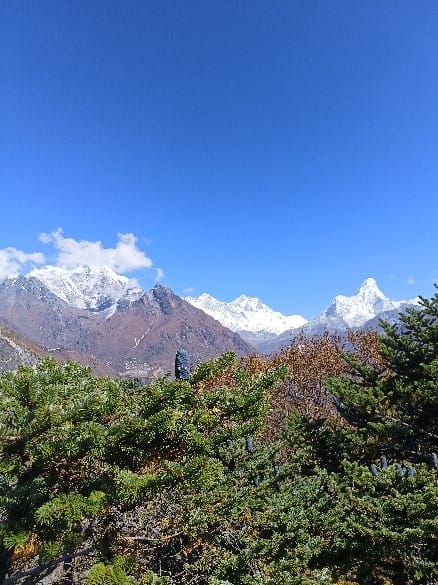
Then, through a gap in the clouds, we saw it: Mount Everest. Distant, pale, and ghostly, just the tip of its summit rising above the lesser peaks. It felt almost unreal, as if the mountain were watching us rather than the other way around. Obviously, we had to stop for a funny photoshoot with our first sight of Mount Everest.
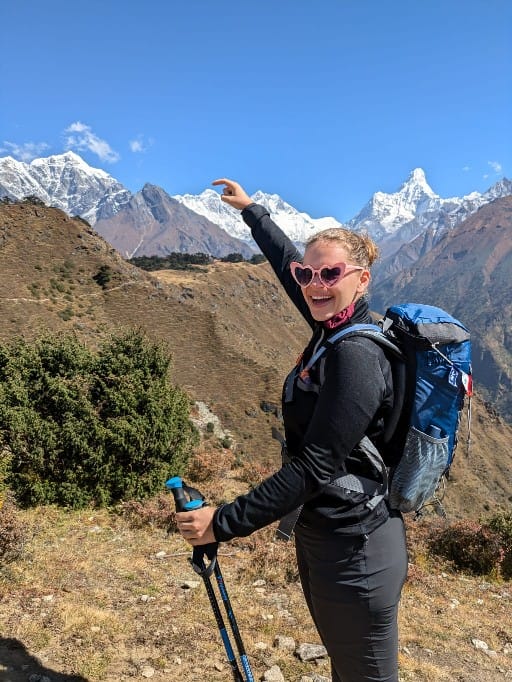
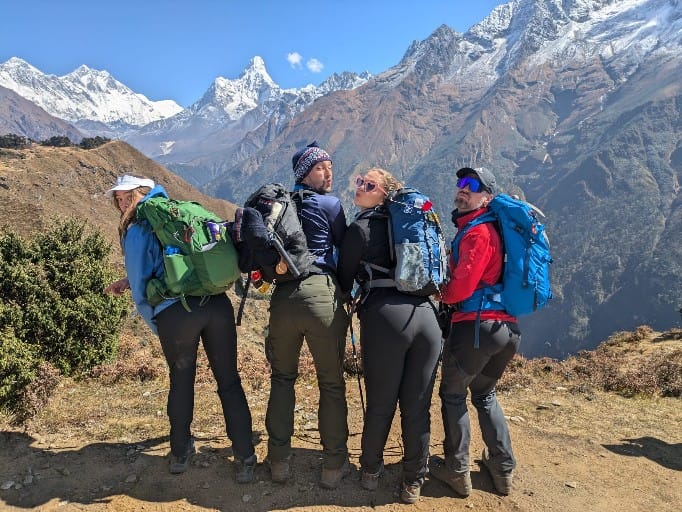
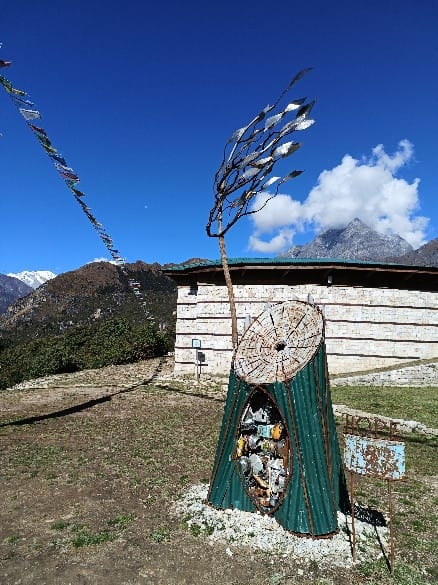
We paused at a small museum along the trail, dedicated to the effort to clean Everest of the plastic pollution left behind by climbers. The idea was simple: each visitor carries a few extra kilograms of waste back down to Lukla. Outrageous to think of the world’s highest mountain as a heap of garbage. But with this small act, we helped resolving this sad situation.
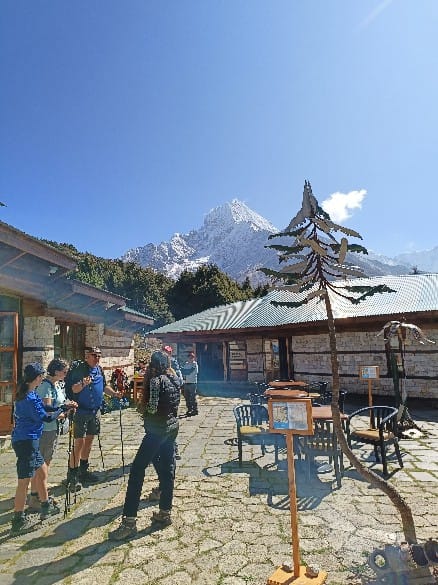
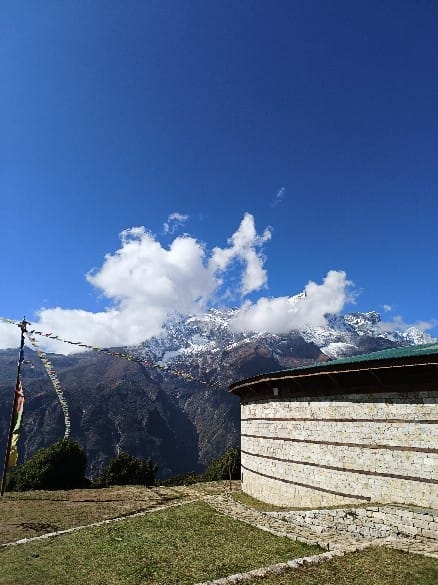
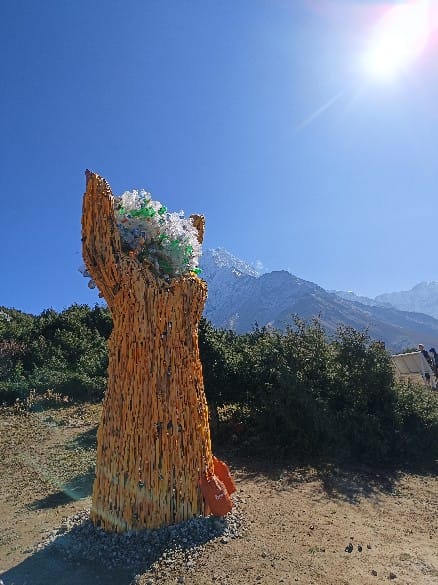
After a warm cup of ginger lemon tea that burned pleasantly against the cold air, we continued toward the Hotel Everest View. The final stretch was steep but spectacular. Small flowers hid in the short grass that lined the slopes, and the path opened into sweeping panoramas of snow and stone.
At the hotel terrace, we sat quietly, each of us staring at Everest’s distant white peak, framed by blue sky and sunlight, whilst enjoying tea. We took our obligatory photos, of course, but mostly we just looked. There was something sacred about that stillness.
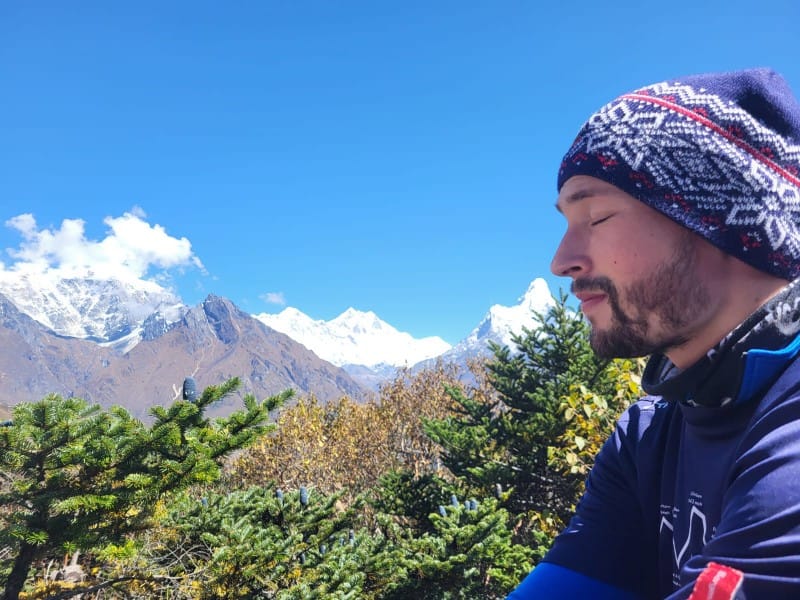
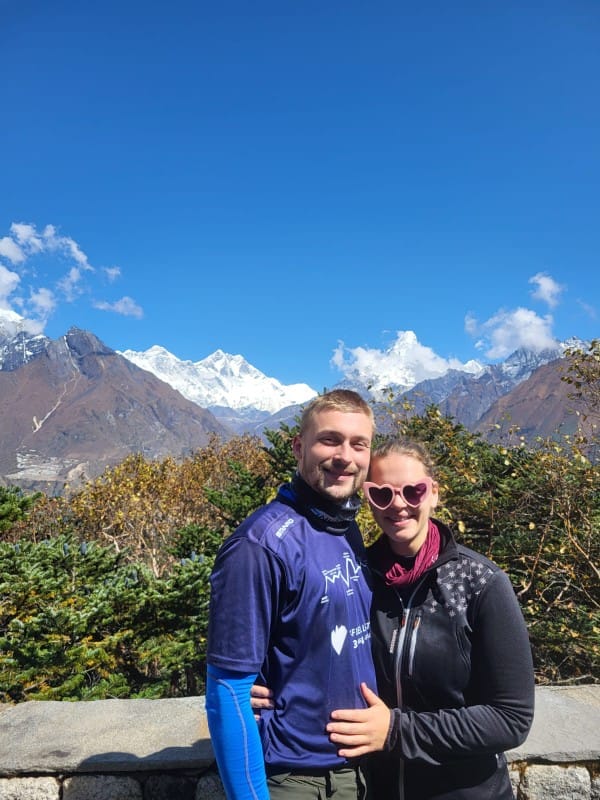
The descent back to Namché was another story, looser rocks, sharper turns, and tired legs. Kiki slipped on a stone and landed on her bum, laughing as she stood up again. By 2 p.m., we reached our teahouse, the smell of lentil soup and garlic drifting from the kitchen.
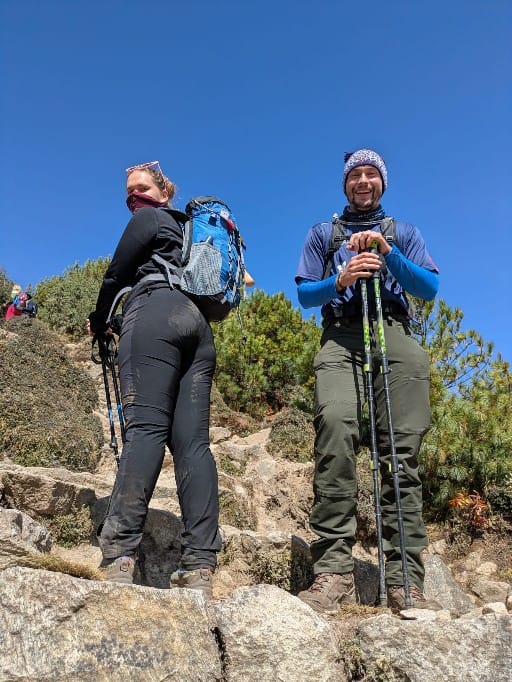
After lunch, Kiki, Christoph, Gabby, and I wandered through Namché Bazaar’s winding alleys. Gabby had heard that a friend had left her a message in a dark little pub. We found it, scrawled on the wall among hundreds of travelers’ notes—a small connection between moments, continents apart. We also picked up a deck of Everest playing cards for the rest of the trek.
Kiki led us through tiny side routes, half-stairs, half-mud, discovering corners full of chickens, goats, and even a few patient horses. Prayer wheels spun endlessly beside a river, the current itself turning the wheels of devotion.
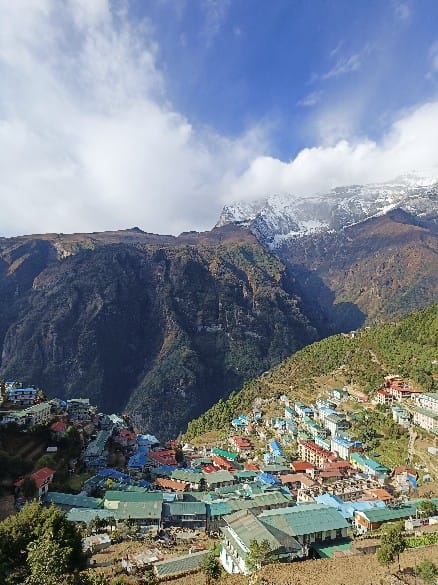
By evening, we were back at the teahouse, huddled around a table. We played cards and wrote in our journals as the temperature dropped. My oxygen levels read 85 after dinner. Later, we played “Presidenten” with the Sherpas. Christoph was fiercely competitive, but that didn't stop him from losing almost every round.
By 8:30 p.m., we crawled under our blankets, exhausted and content. Tomorrow will be steeper, higher, and harder, but tonight, we experienced some "rest".