Tea on the mountainside
“A cup of tea shared with a friend is happiness tasted and time well spent.” — Tea proverb
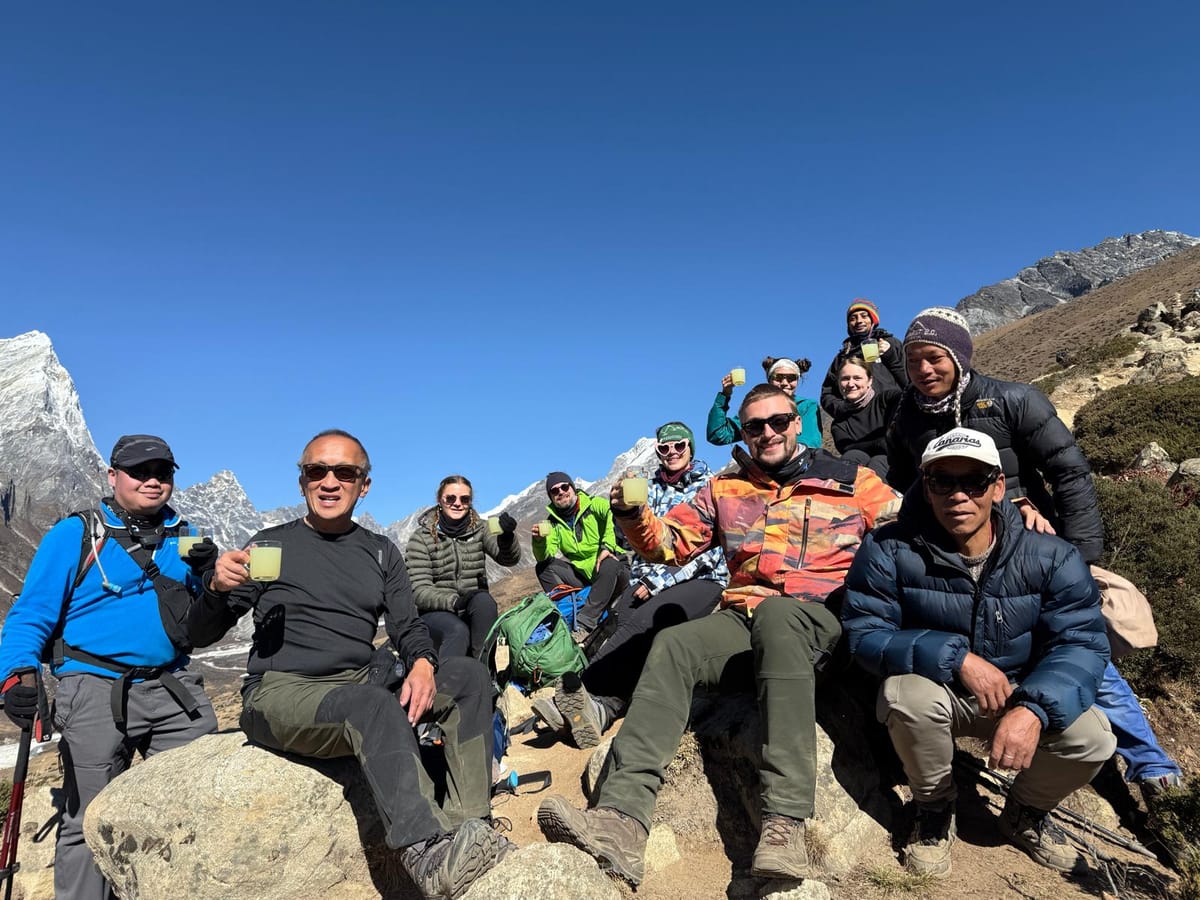
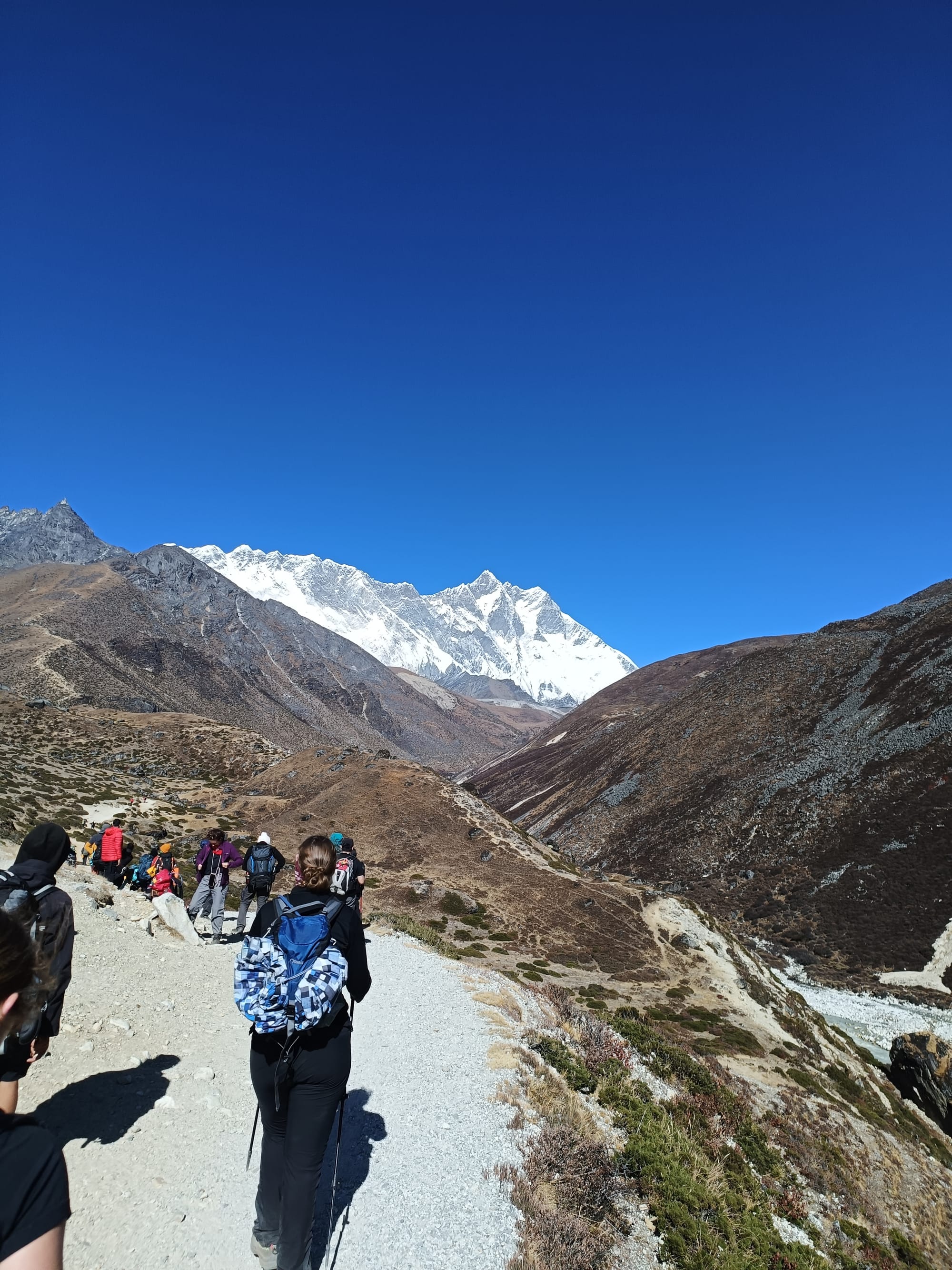
Another acclimatization day. The air felt sharp and thin when we stepped outside in the early morning, our breath curling into pale clouds that vanished almost instantly. We set off before the sun had fully risen, climbing steeply up the mountainside. Within minutes, our hearts were racing and our legs burning, but each step revealed a broader view of the world below us.
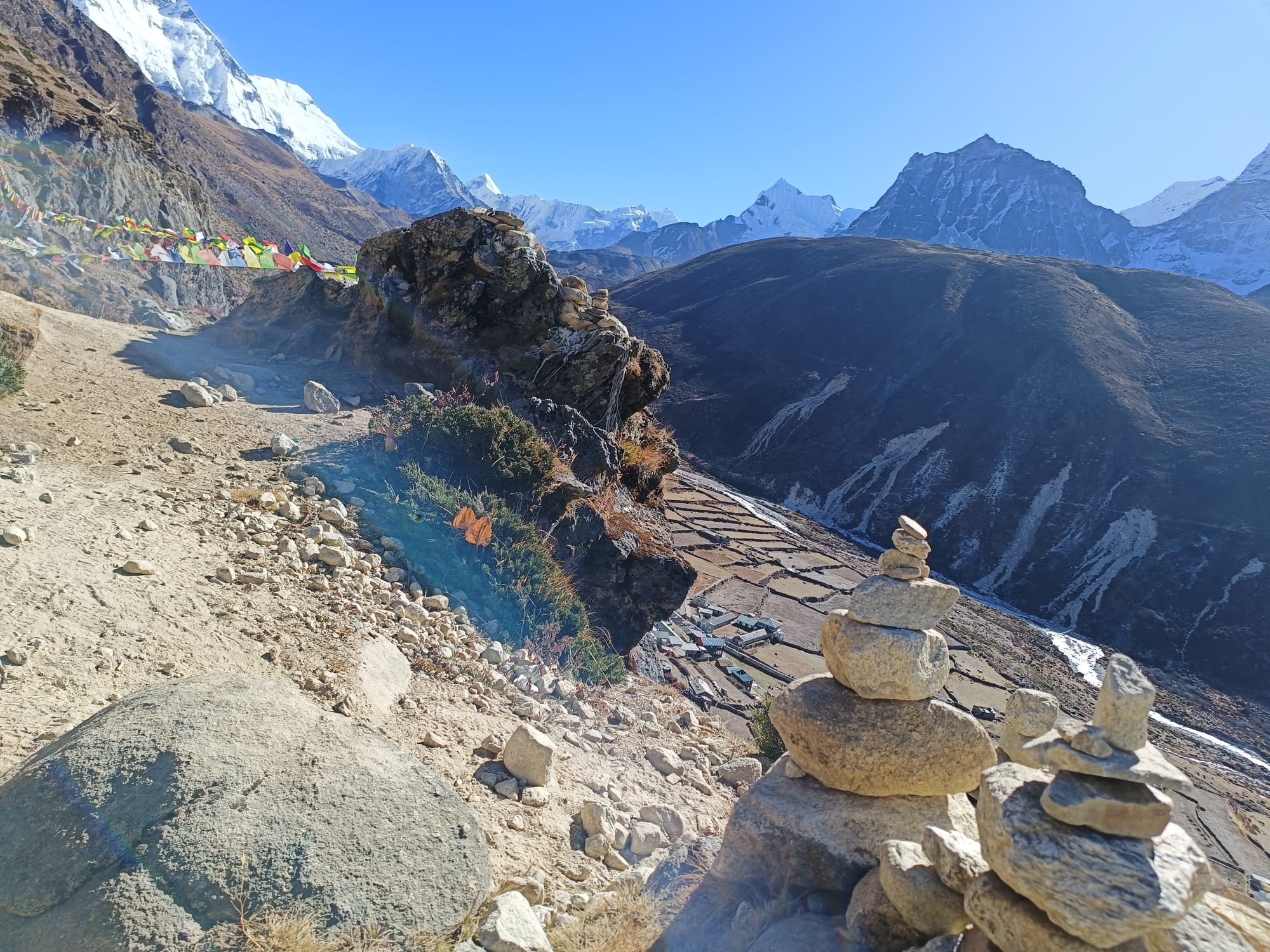
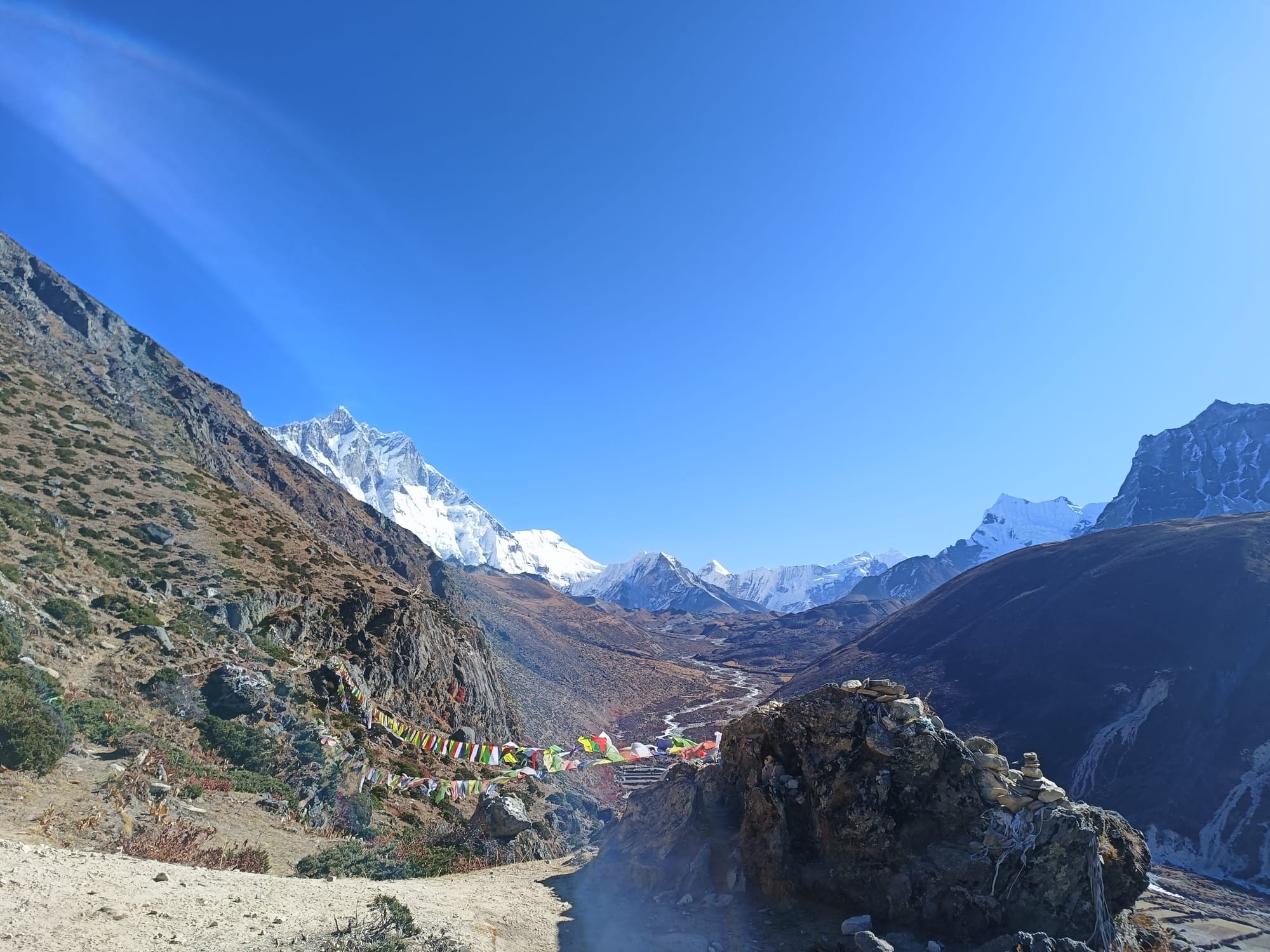
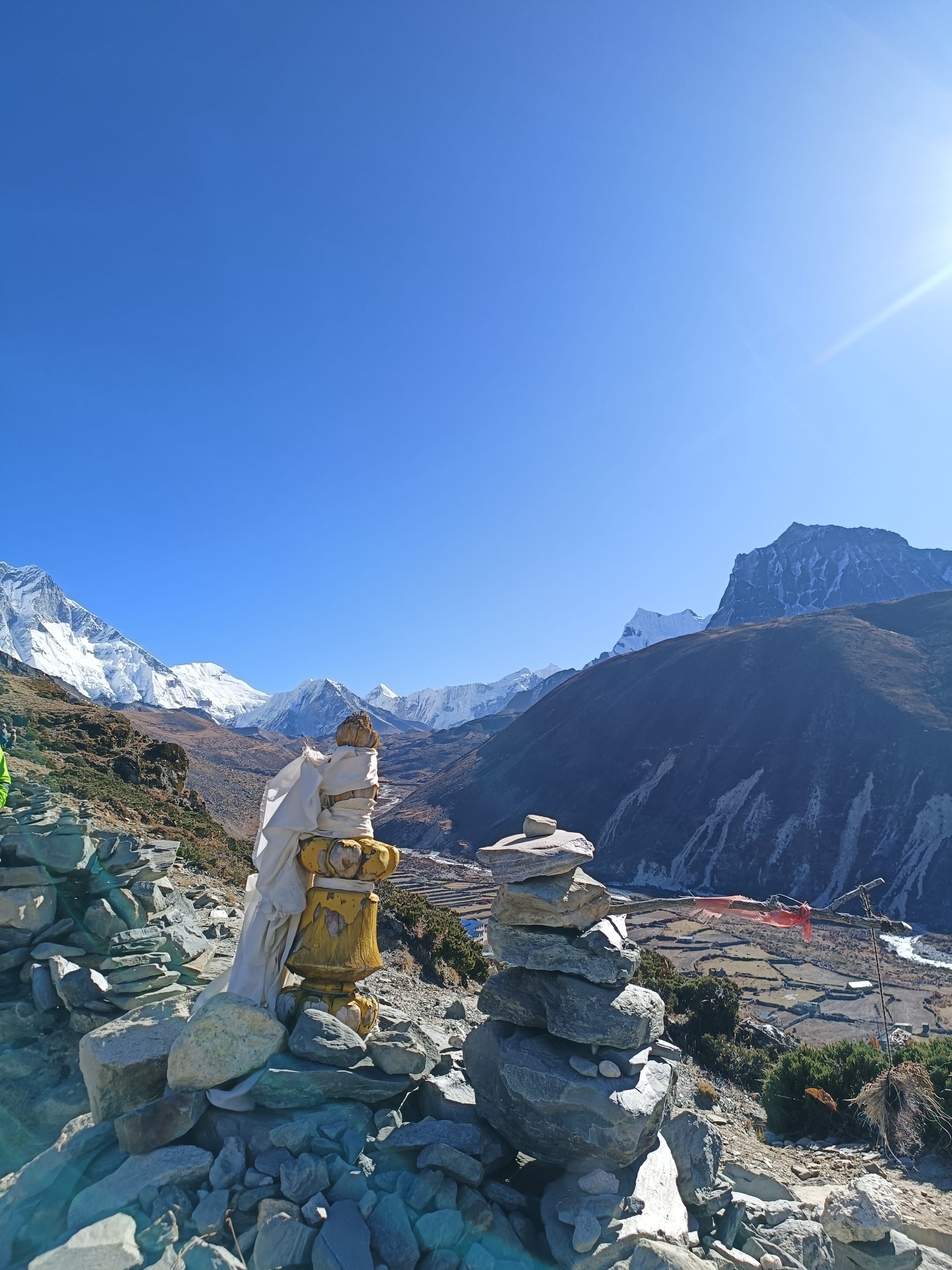
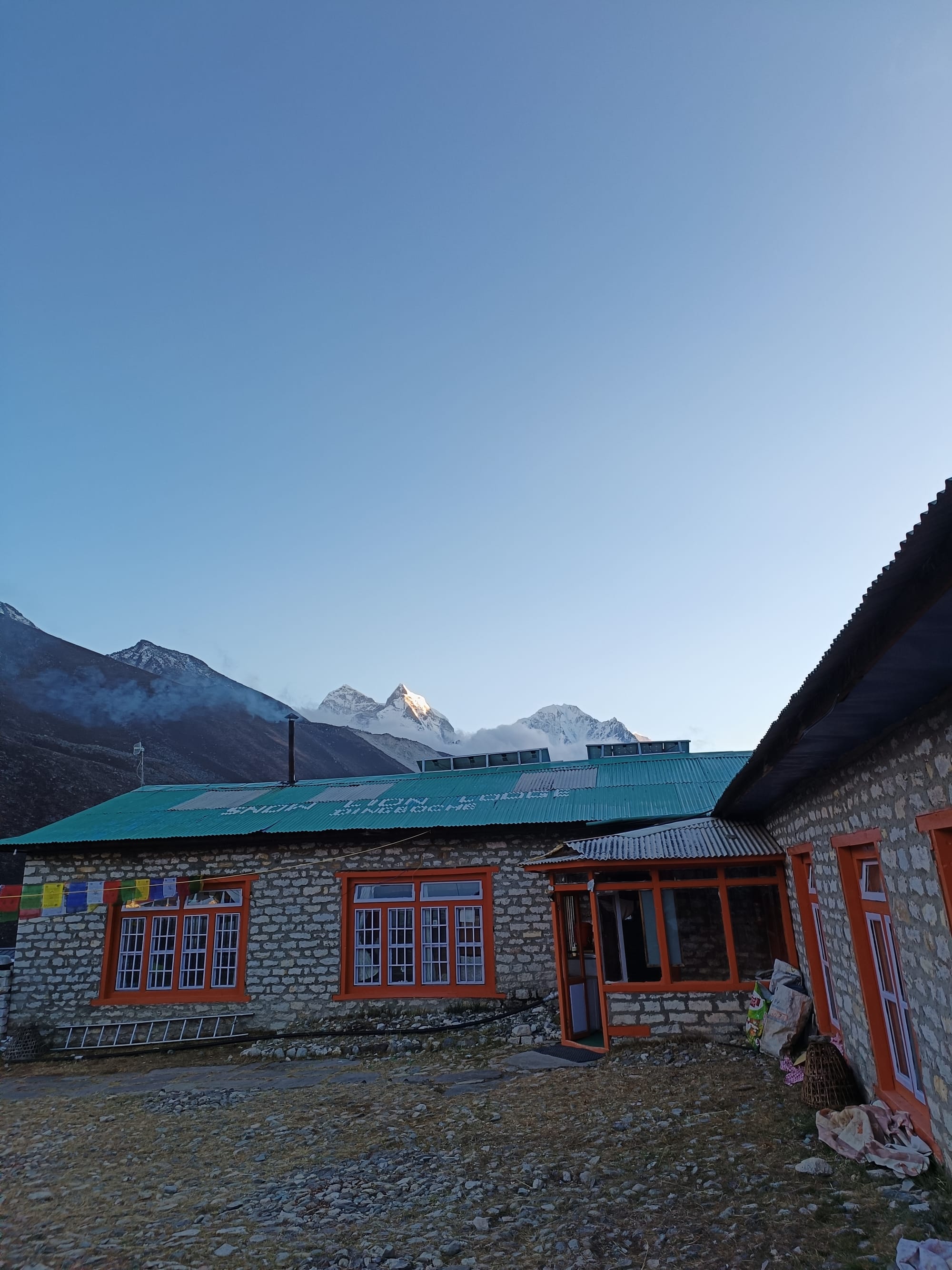
Soon, we reached a natural ledge overlooking the small village we were calling home for the moment. From above, it looked like a patchwork of stone houses built from heaps of rock, low walls snaking between them, prayer flags fluttering in every direction. Yaks wandered freely, their movements slow and enduring, perfectly adapted to a place where wind and altitude dictate every rhythm of life.
We sat down on a flat rock, letting the sun warm our backs. The air was crisp and dry, carrying faint hints of dust and cold earth. It felt peaceful. Clear. Like the mountains were giving us a moment to breathe.
After about ten minutes, Bibek looked at us with a mischievous smile.
“The surprise is coming,” he said.
We exchanged blank looks. Nobody knew what he meant, or what he had planned.
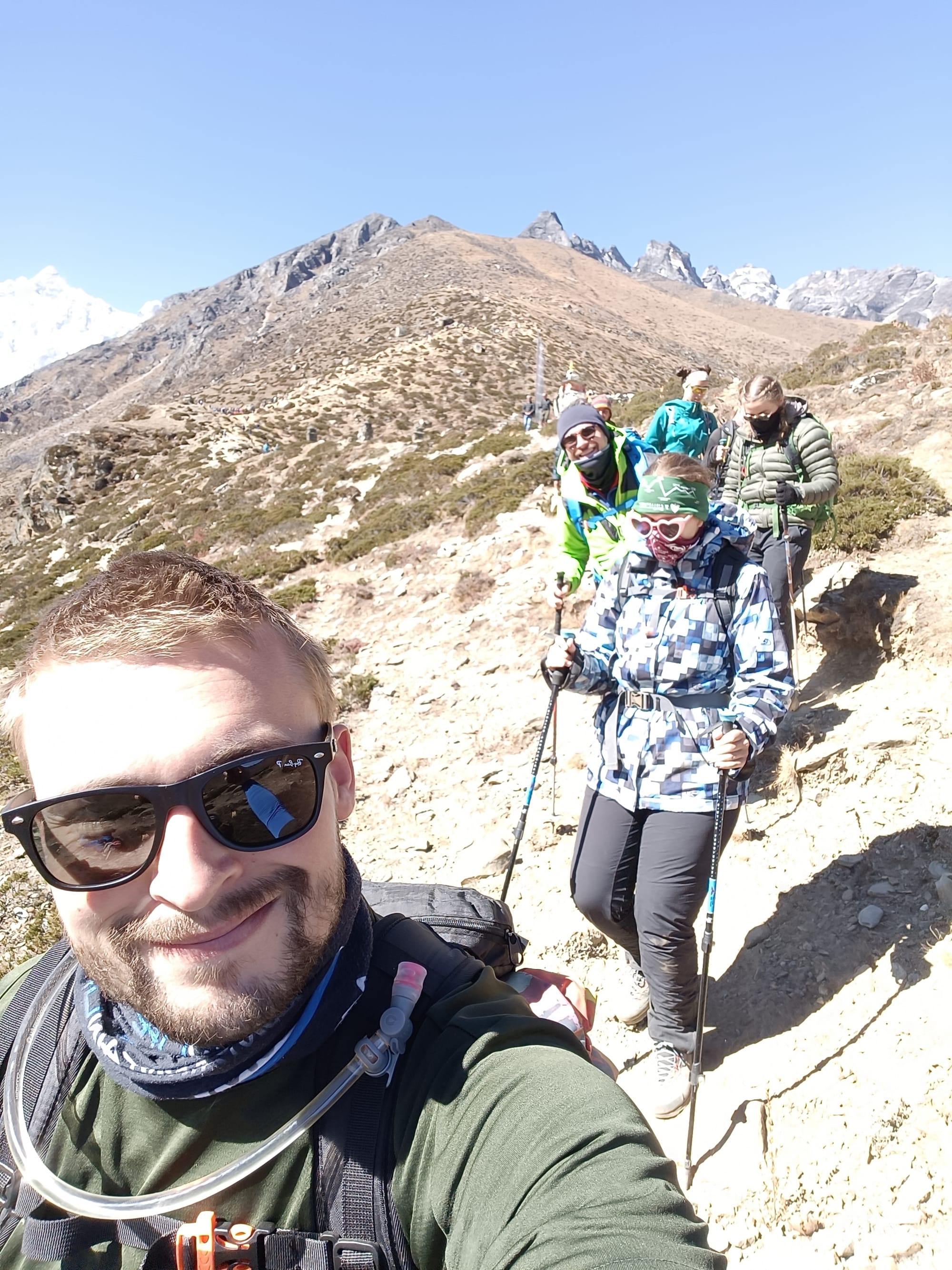
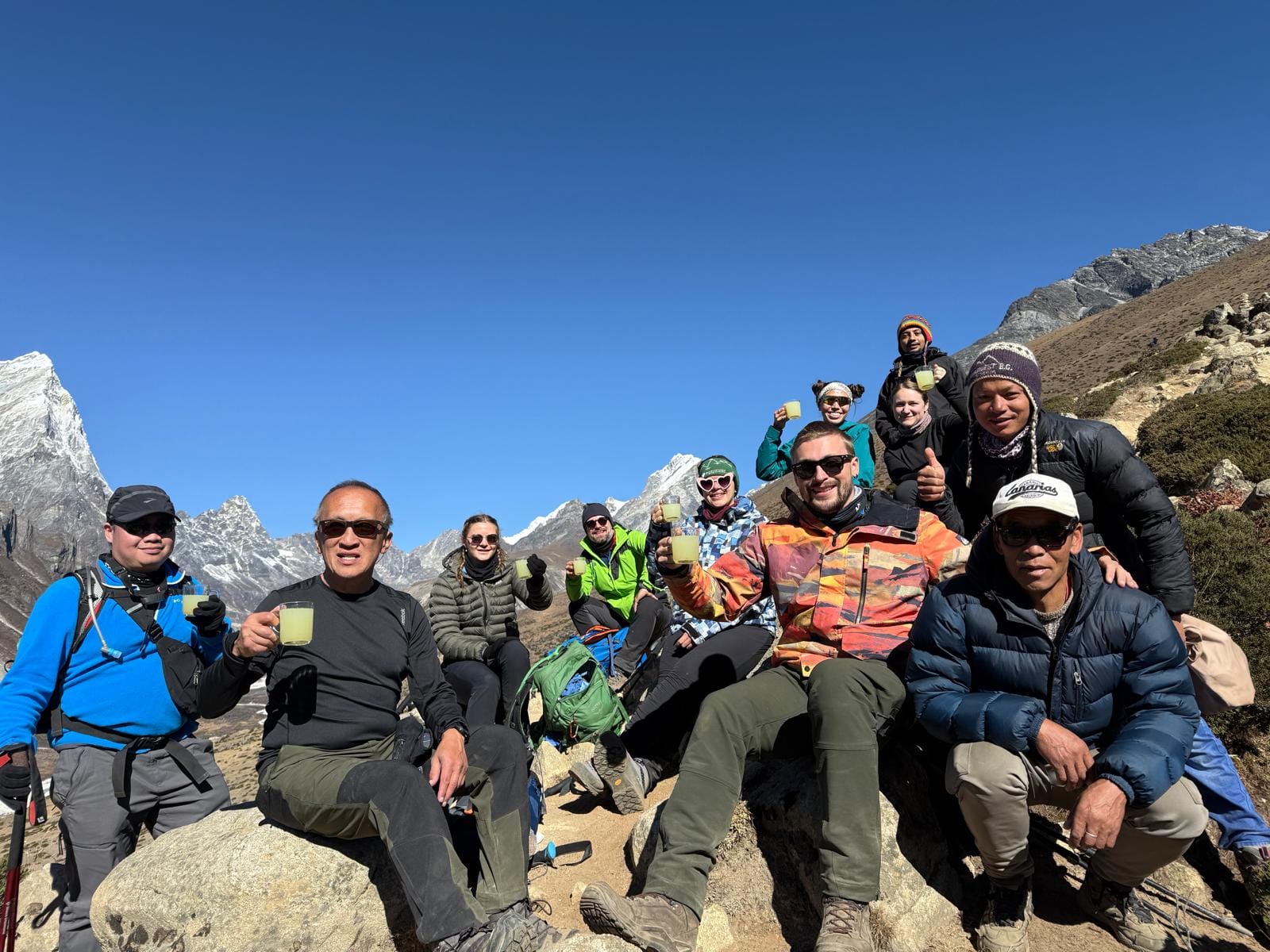
And then we saw them: the entire porter crew climbing toward us in flip-flops… on the same steep trail we had just struggled up in our hiking boots. Their steps were steady and effortless, their laughter carrying through the thin air. When they reached us, they revealed their surprise: steaming cups of honey-ginger-lemon tea, brewed in the village and carried all the way up for us.
The warm sweetness cut beautifully through the dusty air. We sat together in a circle, sun on our faces, enjoying the unexpected gift. In that moment, surrounded by mountains and friends, everything felt warmer; the tea, the sun, the companionship.
We chatted about the region and learned something surprising: Annapurna Base Camp will need to be moved in a few years due to increasing landslides. Even the mountains, seemingly eternal, are changing. Climate change makes the permafrost less permanent, leading to more landslides and retreating glaciers.
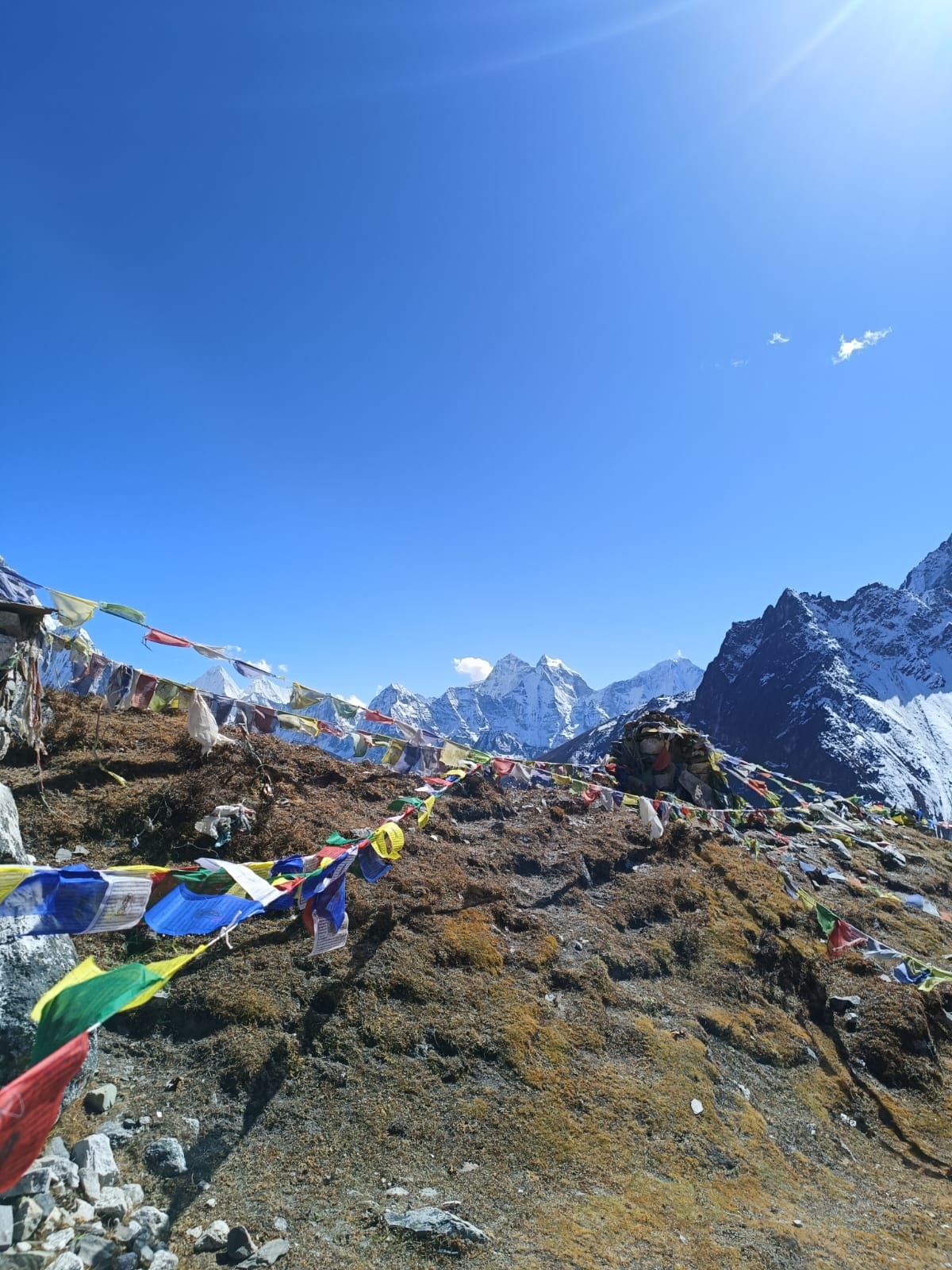
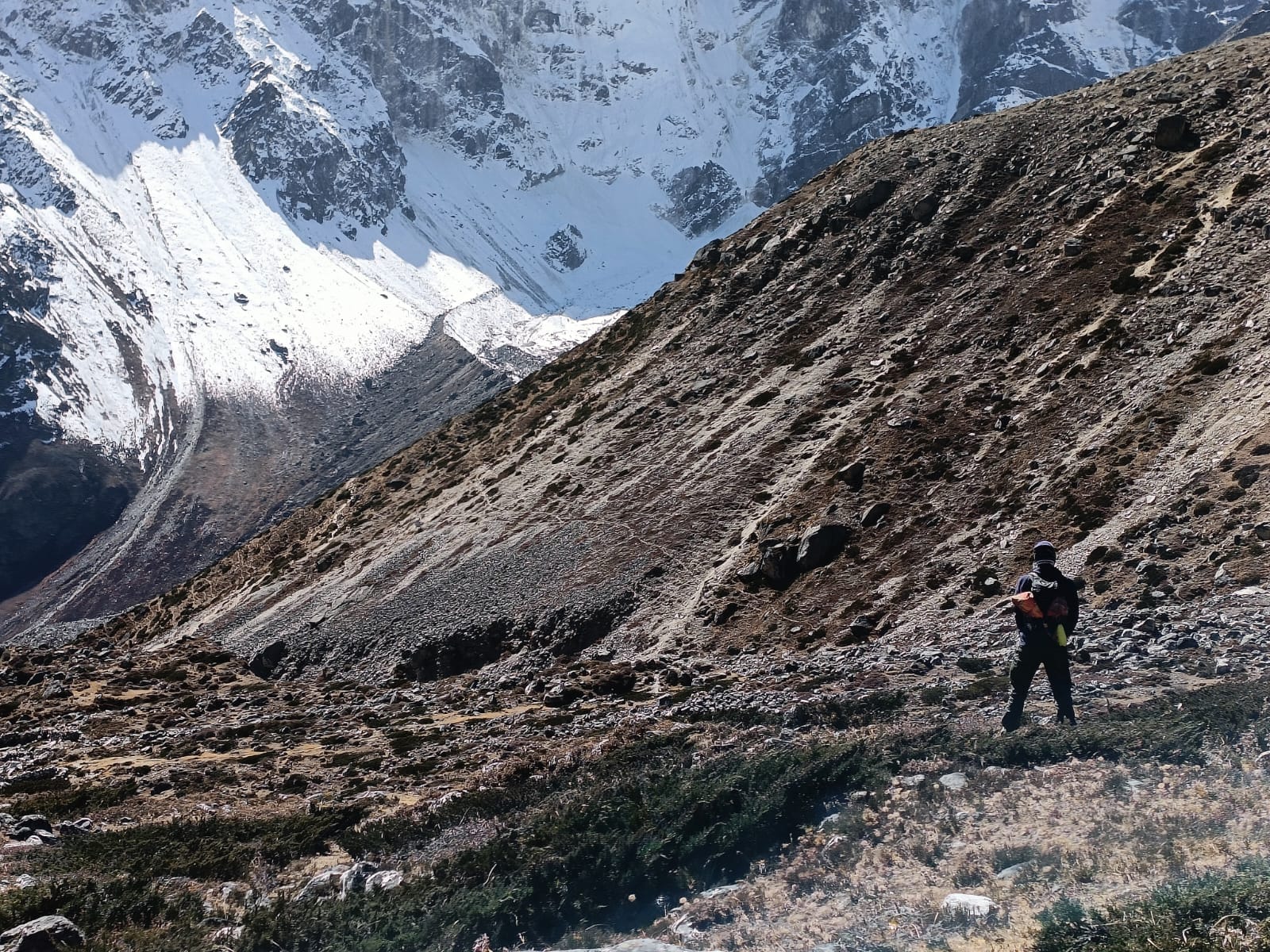
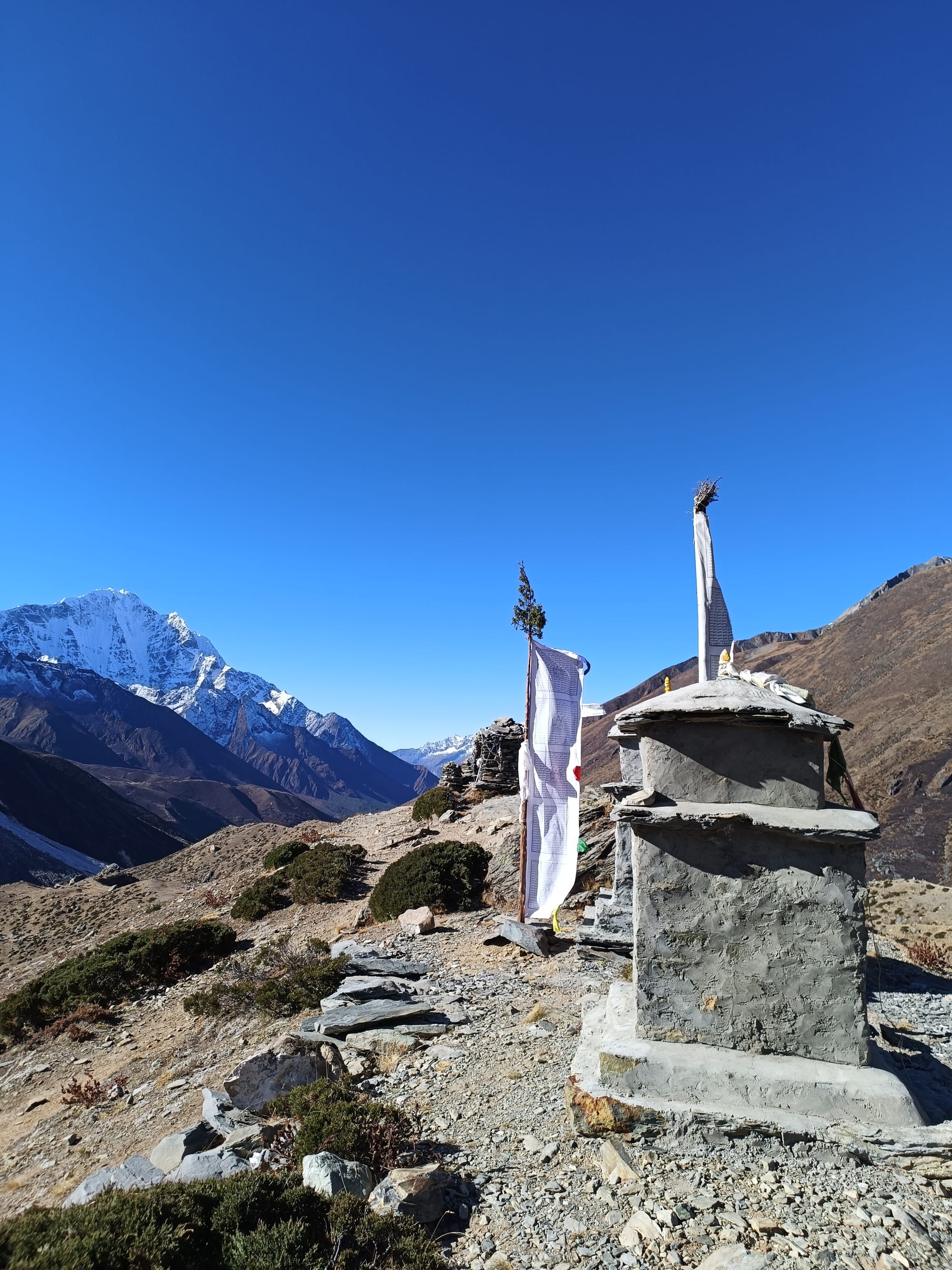
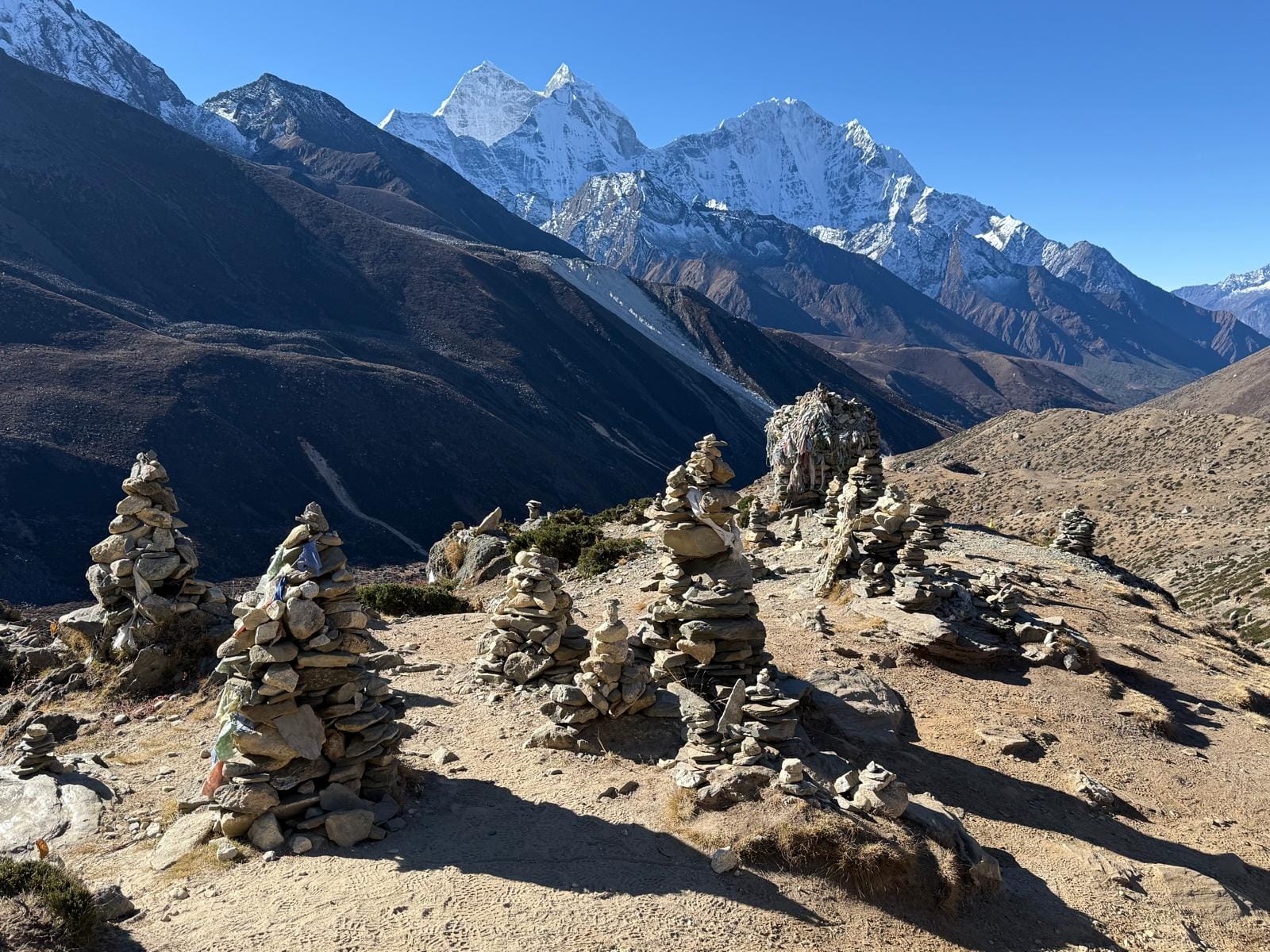
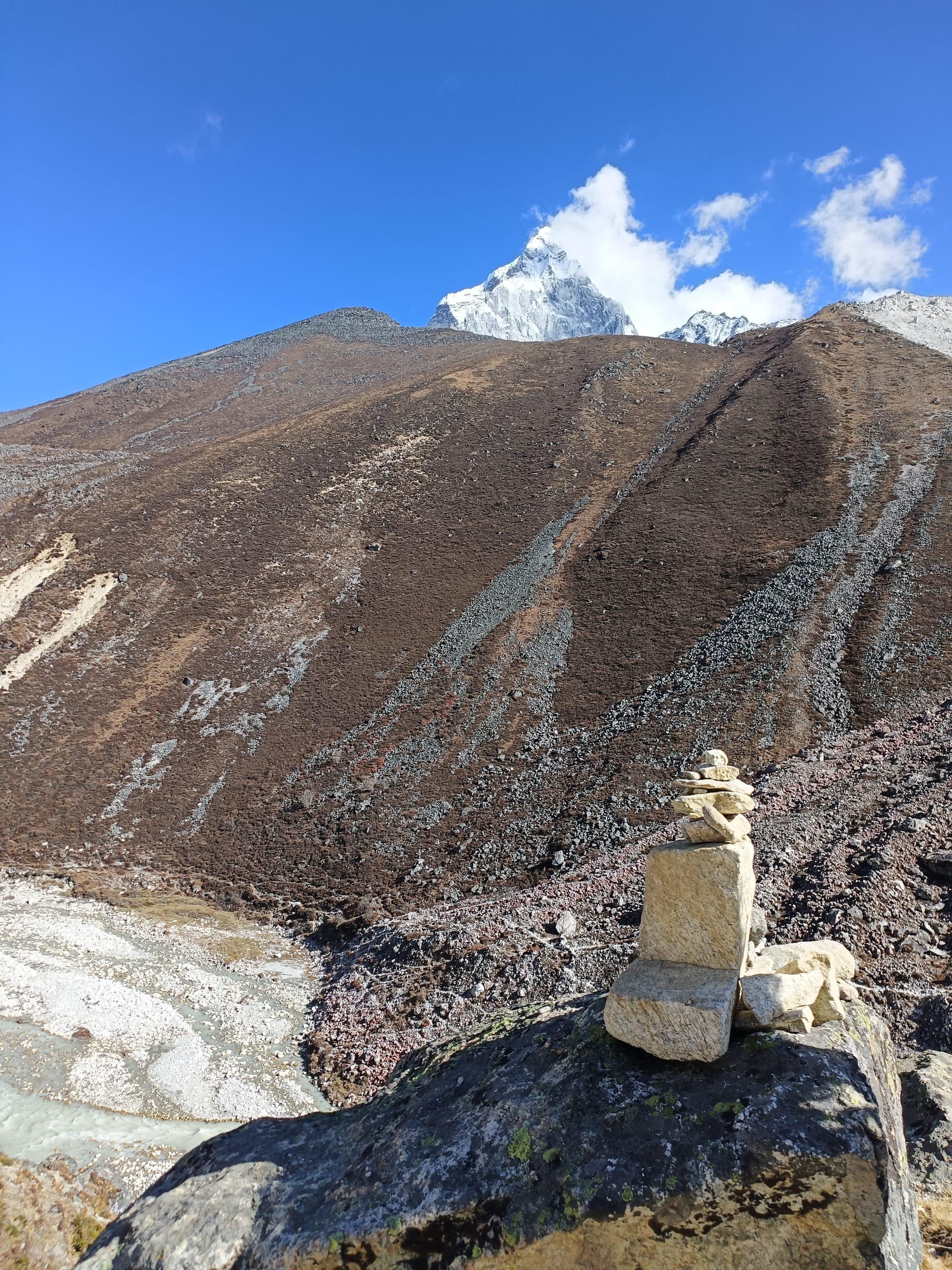
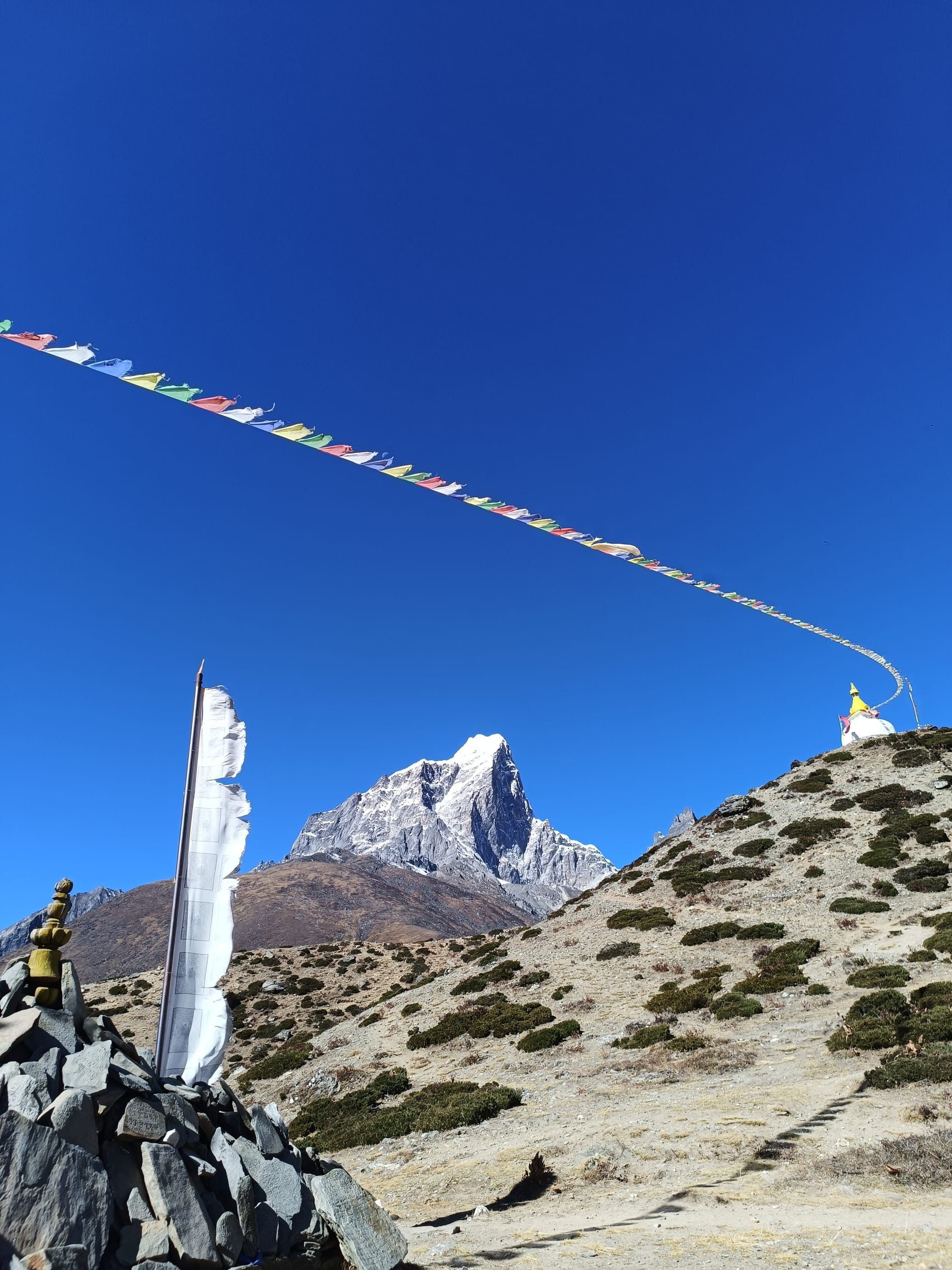
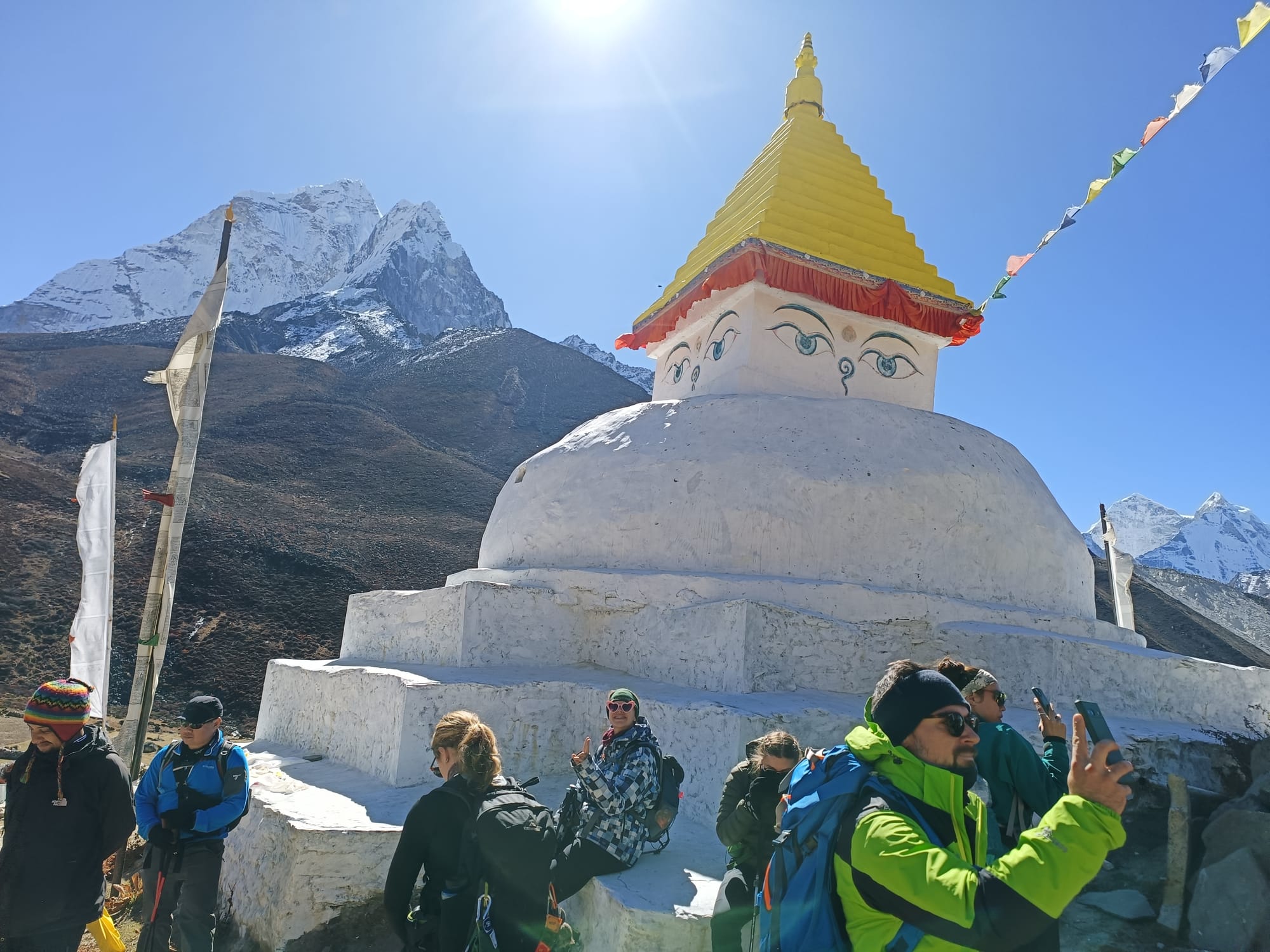
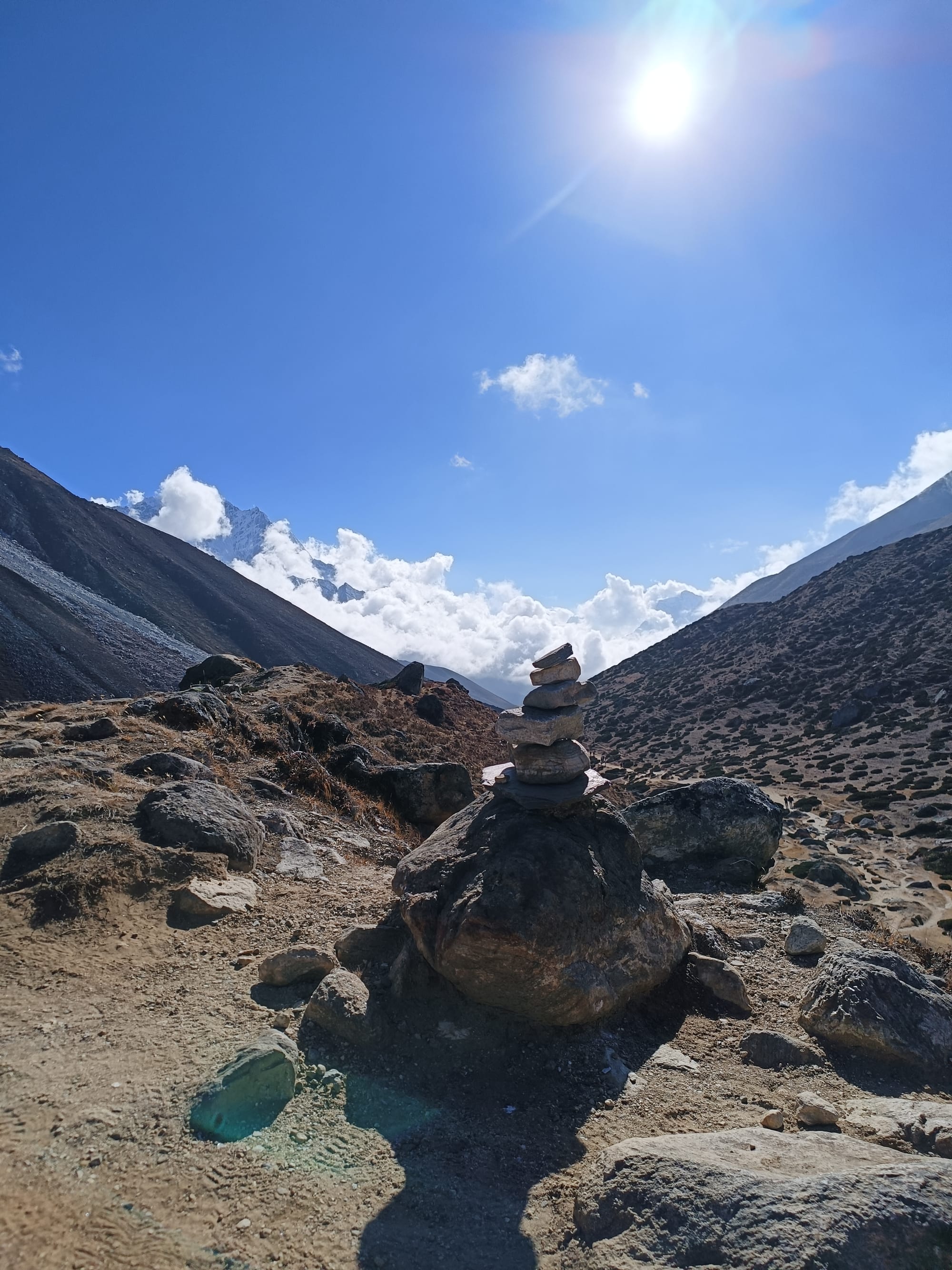
Once the porters headed back down for their well-deserved day off, we continued climbing higher. The path wound past a small stupa perched on the mountainside, each stone carefully balanced atop another. Bibek explained the meaning behind its structure:
- The stacked stones represent loved ones who have passed away;
- The stupa’s upper shape symbolizes a lotus, the flower from which the Buddha is said to be born, thriving even in the harshest conditions;
- Fourteen carved steps represent the fourteen stages toward Nirvana;
- The painted eyes are wisdom;
- The third eye, infinite wisdom;
- The nose, shaped like the Nepali number one, symbolizes unity and grounds the spirit to the earth.
Even the wind seemed to pause around it, as if paying respect.

Back in the village, we had lunch together before settling into the common room to watch the documentary Sherpa. It was eye-opening, raw, powerful, and honest about the risks and sacrifices Sherpas and porters face every single season. When the film ended, the room was quiet. Exhaustion and humility hung in the air.
We all napped for nearly an hour before dinner. Later, Kiki and I decided to explore the village. As soon as we stepped outside, we spotted two yaks grazing just outside the teahouse garden. With their massive shapes, slow and calm.
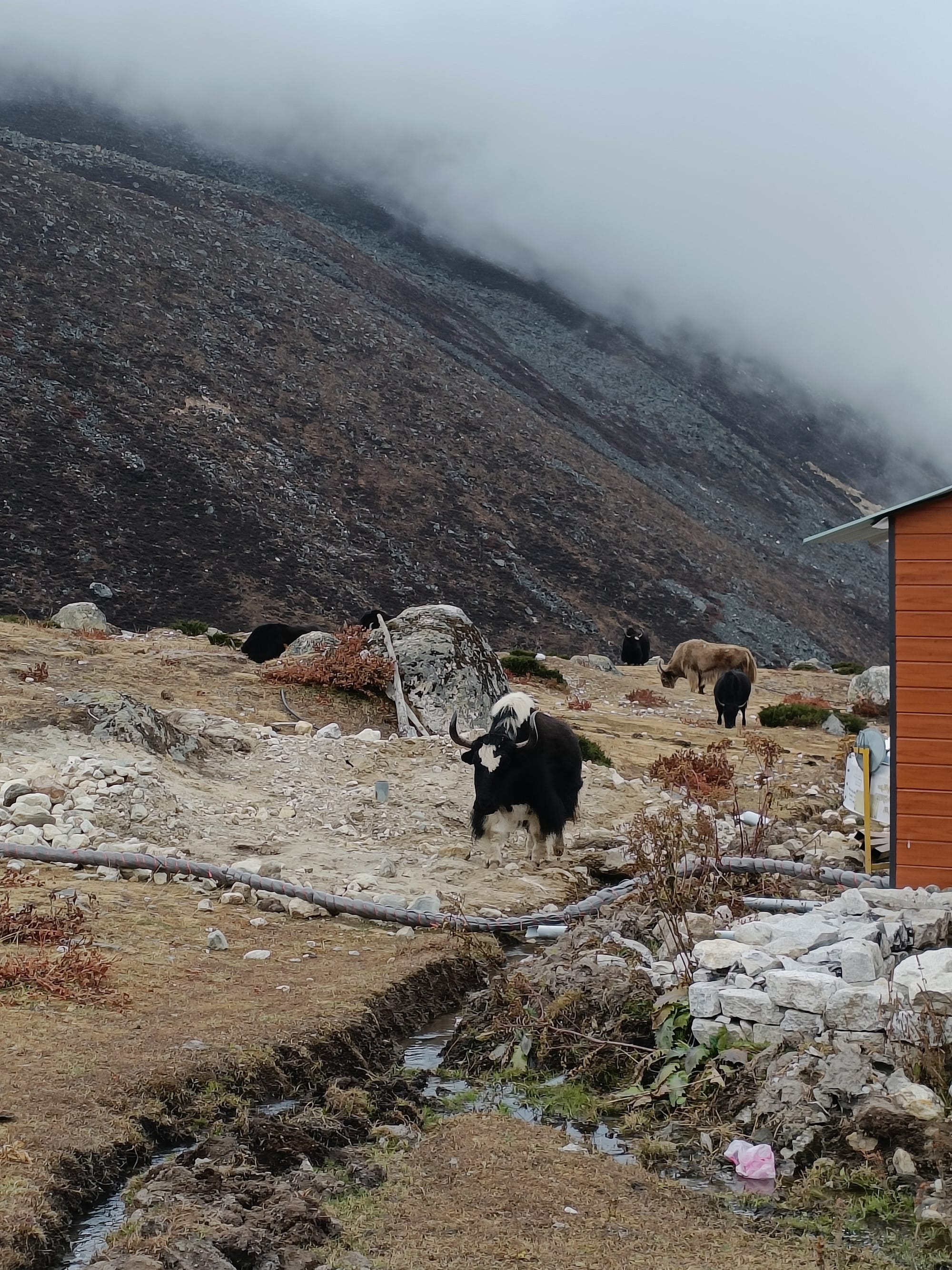
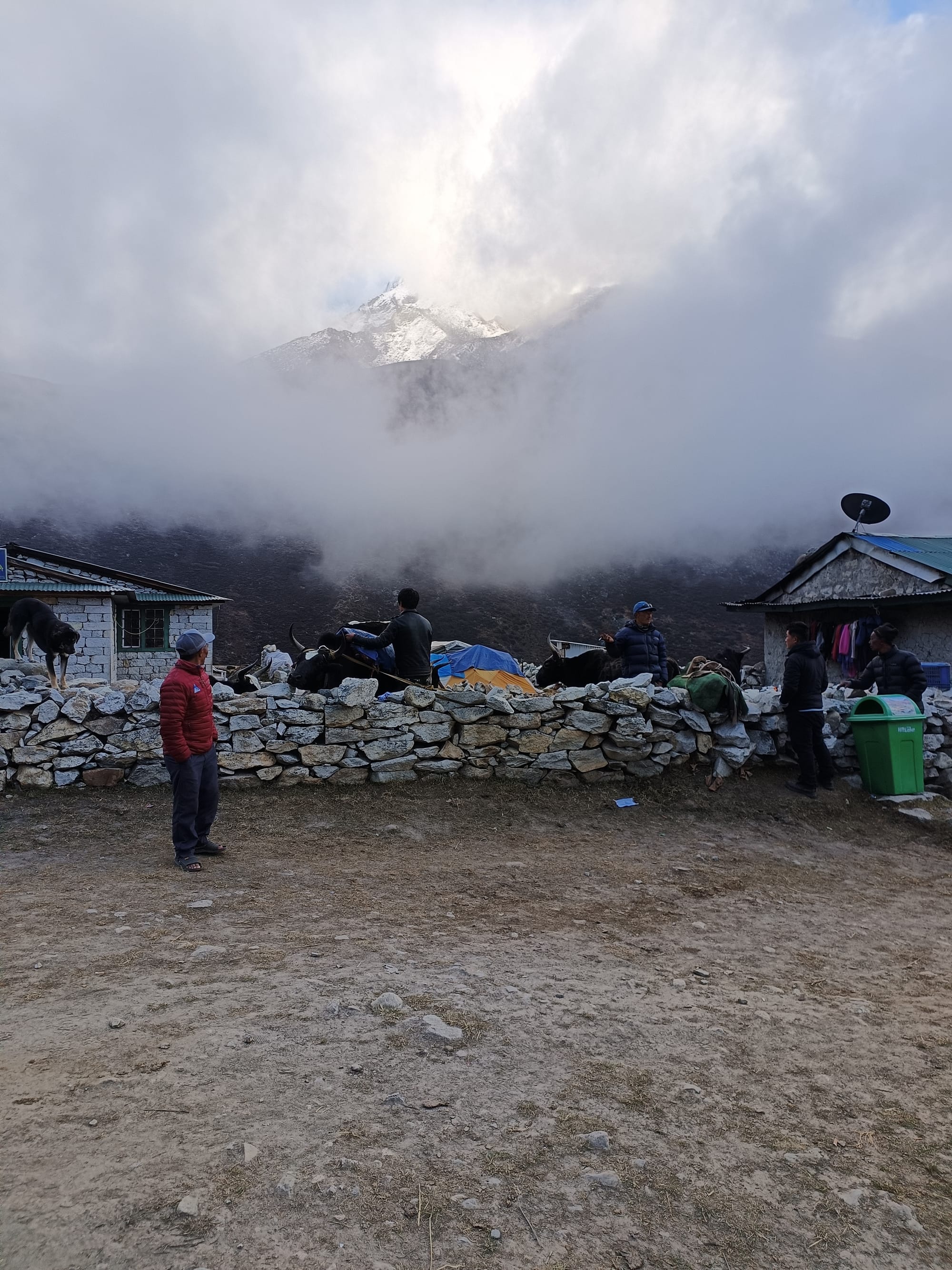
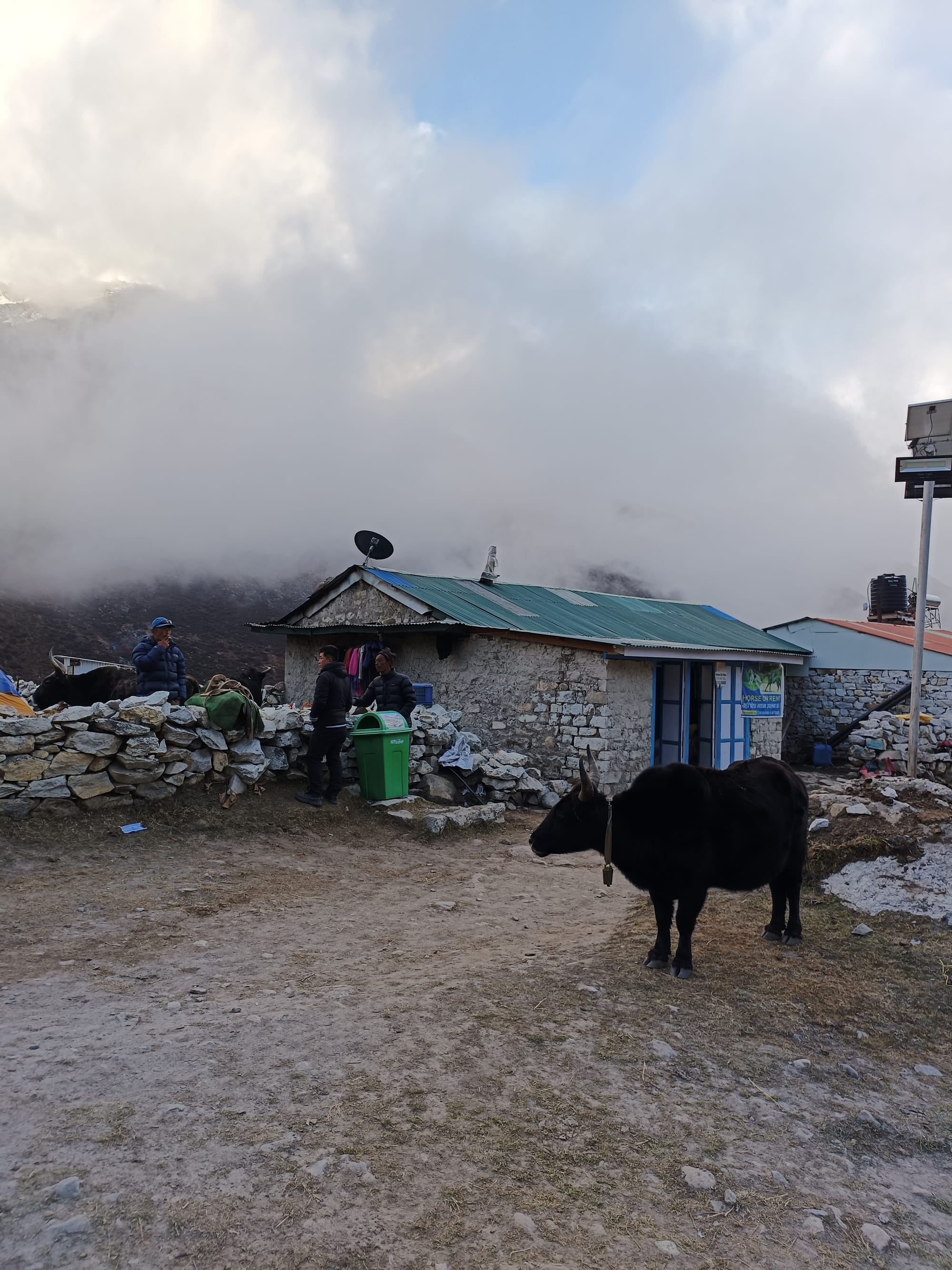
We wandered off the main path, following a narrow trail until we found ourselves in an open field draped in mist. The clouds drifted past us like ghosts, revealing and hiding yaks as they moved. It was beautiful, soft, eerie, almost otherworldly.
Then one yak approached us.
A chill ran down my spine.
He let out a deep, resonant moo, the kind that vibrates through your chest. It sounded like a challenge. He lowered his head, buried a horn in the dirt, and flung earth into the air, then scraped the ground with his hooves.
We did not need a second warning. We slowly backed away, hearts pounding, until the field and its moody guardian were safely behind us.
Back near the teahouse, villagers were feeding their yaks, calling softly to them. The sun began to set, turning the plateau gold for a moment before the cold slipped back in.
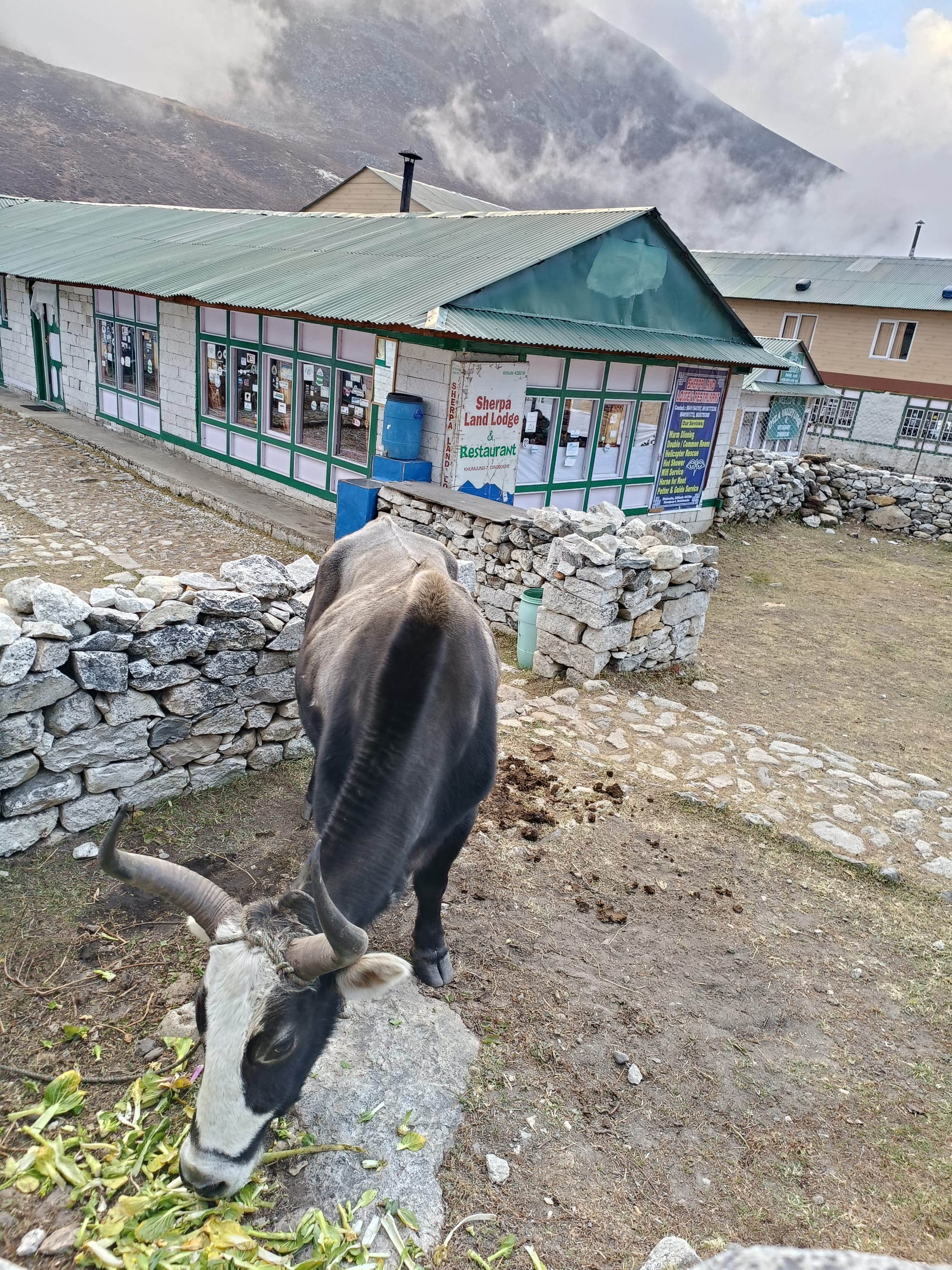
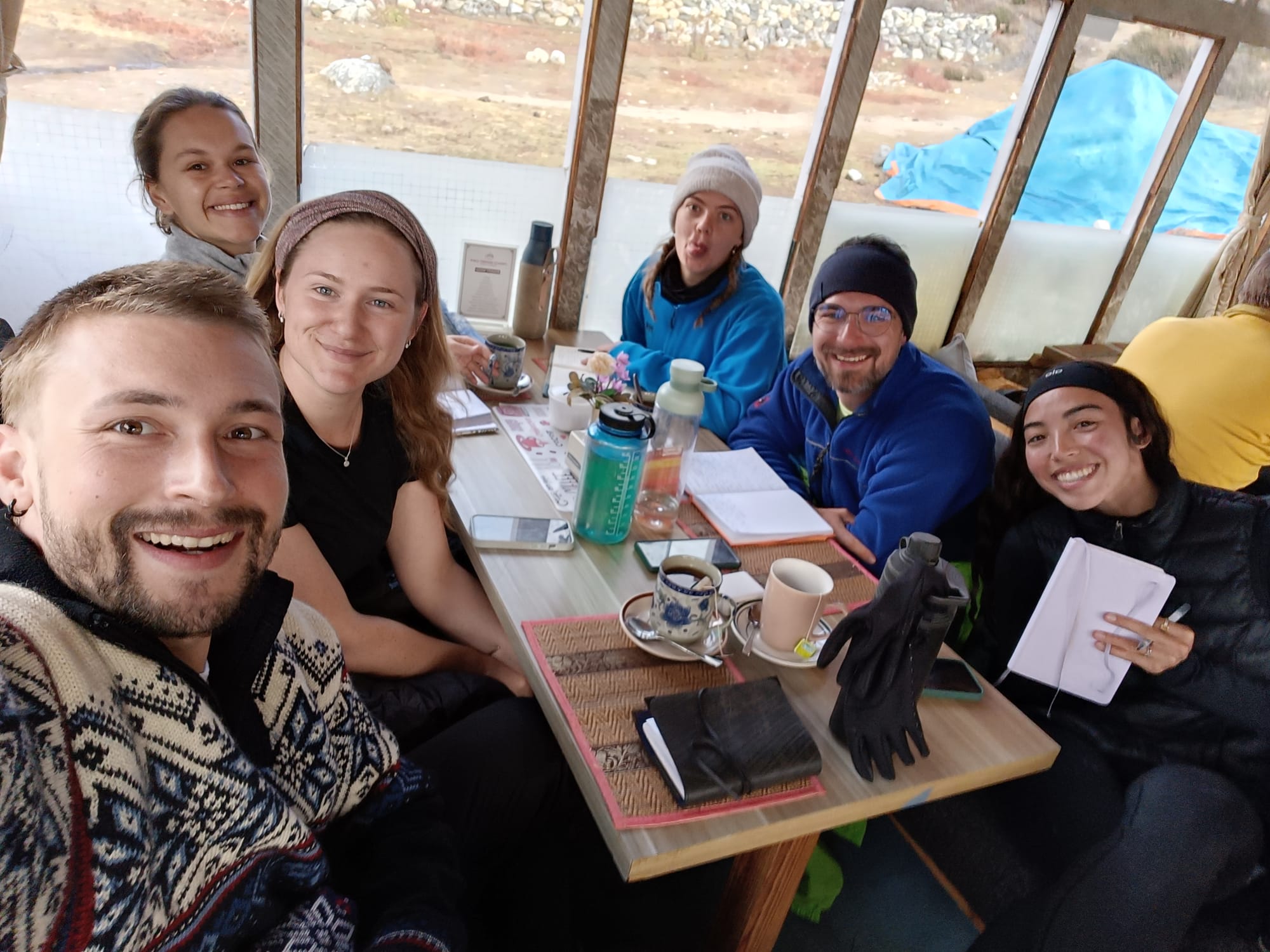
We regrouped with everyone in a small café. We journaled, talked about the day, and laughed in that worn-out, happy way that only comes from altitude and shared effort. After dinner and a few rounds of card games, we called it another early night, the mountains waiting for us again in the morning.