The Escape pt.2
"The mountains are not fair or unfair, they are just dangerous.” — Reinhold Messner
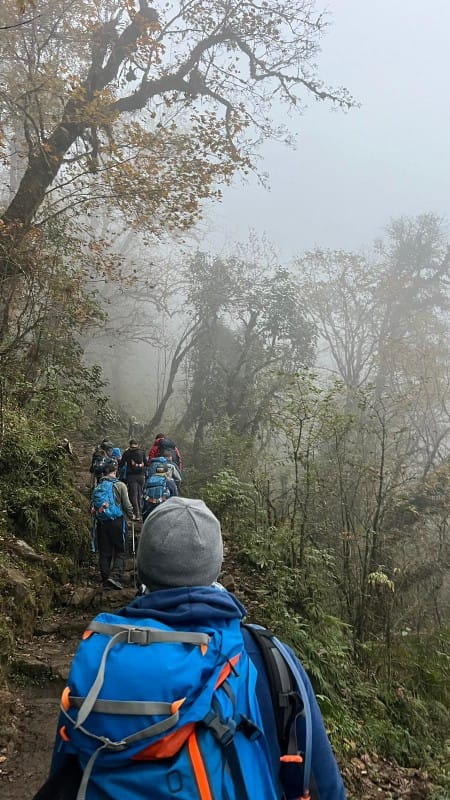
We were waiting, stranded at a teahouse in the middle of nowhere in Nepal. The sun was sinking fast, dusk bleeding into night, the mountains slowly turning into dark silhouettes against a fading sky. As Bibek paced the room, phone glued to his ear, trying to find a way out, more G Adventures groups trickled in, all carrying the same exhausted, uncertain expressions.
To keep from spiraling, we ordered hot tea and played card games at the wooden tables, our fingers wrapped tightly around warm cups, clinging to small comforts. Laughter came in short bursts, forced at times, as the realization crept in that this might not end tonight, that we might be walking through the night instead. Kiki grew quiet, then cold. Her body began to shake uncontrollably, and she tried to warm herself by the fire in the kitchen.
When the sun finally disappeared behind the ridgelines and darkness took complete control, Bibek returned with a plan. He had struck a deal with the donkey herder we had passed earlier. Without much discussion, we threw our duffels onto the donkeys’ backs and followed them into the night, their hooves leading us through thick mud, wet earth, and the sharp smell of donkey urine. Headlamps and phone torches bounced wildly in the darkness as we crossed the landslide. Slowly, carefully, as if the entire Everest Base Camp trek had been preparing us for this moment.
It took an hour to climb up and over the landslide, and another half hour down the other side, back onto what passed for a road. We had been promised jeeps here. Instead, there was only one. The other group crammed themselves into it. Nearly twenty people and their luggage squeezed into a single pickup. The rest of us were left behind once again.
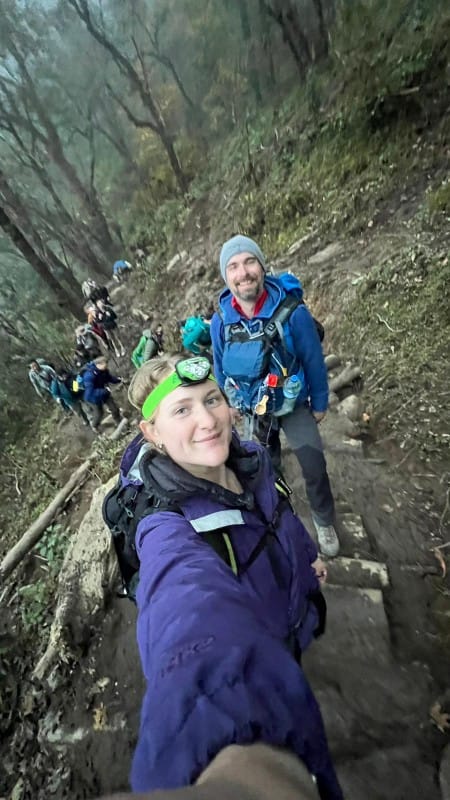
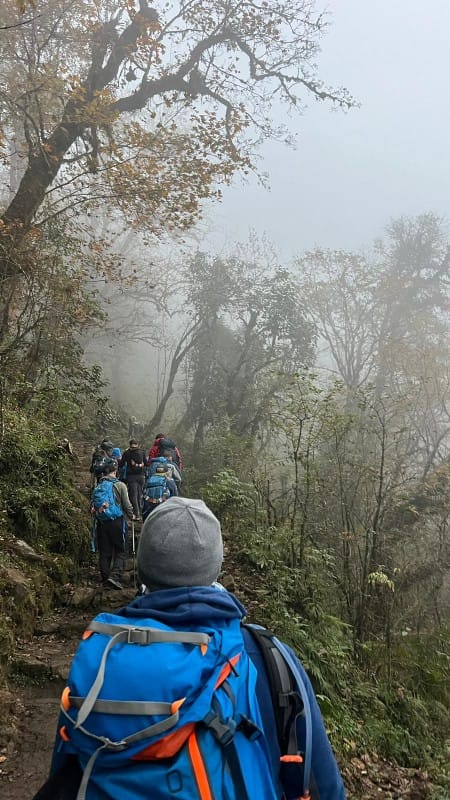
We kept walking, our flashlights carving narrow tunnels of light through the night, until we reached yet another teahouse. By then, it was past 7 p.m. We ordered food, hungry and drained, hoping for transport to Kathmandu. This teahouse was even more remote, entirely unprepared for the sudden flood of stranded trekkers. There was no fireplace, no stove, nothing to gather around for warmth. The cold settled into our bones quickly, and even hot food couldn’t bring the feeling back into our hands and feet.
Then, suddenly, Bibek burst into the room. There was a pickup truck outside. It could take four more people, on top of the luggage. We had to move. Now.
Those with the earliest flights jumped up instantly. Quick hugs, rushed goodbyes, promises to see each other again, none of us really knowing if that would happen. Then they were gone, swallowed by the night.
Michael, Kiki, and I stayed behind with Bibek, watching the taillights disappear down the road. We played cards again, stubbornly clinging to routine, trying to ignore the cold and the growing sense of vulnerability. Eventually, Bibek roused us once more. Another truck. This one was ours.
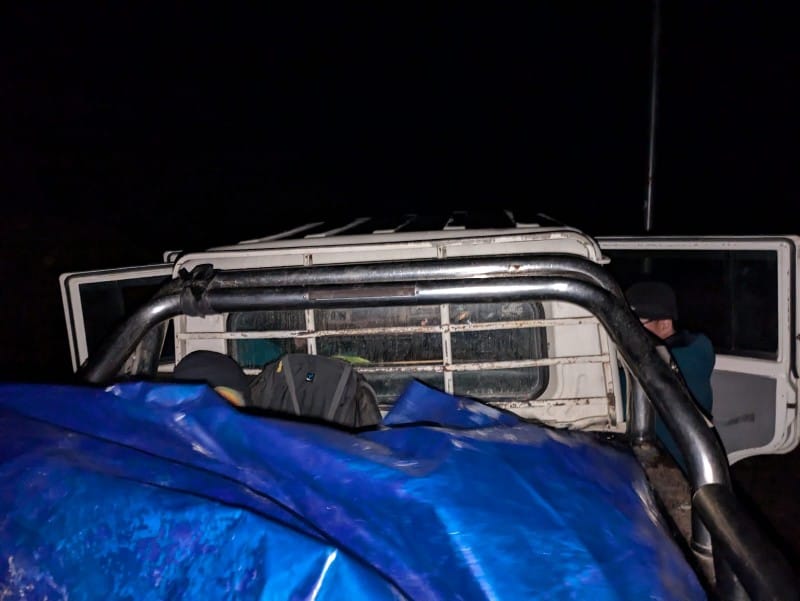
Michael and Kiki were sick, so they climbed into the cab. I climbed into the back. A metal cage bolted onto the pickup, covered with a thin plastic sheet just as the rain started to fall. The door was locked shut. No way out. I couldn’t see more than a meter out of the back of the truck. Just flashes of road, sudden darkness, and the terrifying hint of a cliff dropping away beside us. The back tire bounced on the uneven track, lifting, slipping, gripping again.
We passed other travelers walking alone, shattered, carrying their lives on their backs, moving through the cold, dark Himalayas. Inside the cage, exhaust fumes pooled beneath the plastic, making it hard to breathe. The two Nepali guides beside me smoked and drank beer, unfazed. I covered my mouth and nose, closed my eyes, and tried to sleep.
Fear, exhaustion, relief, everything blurred together.
At least we were moving again.