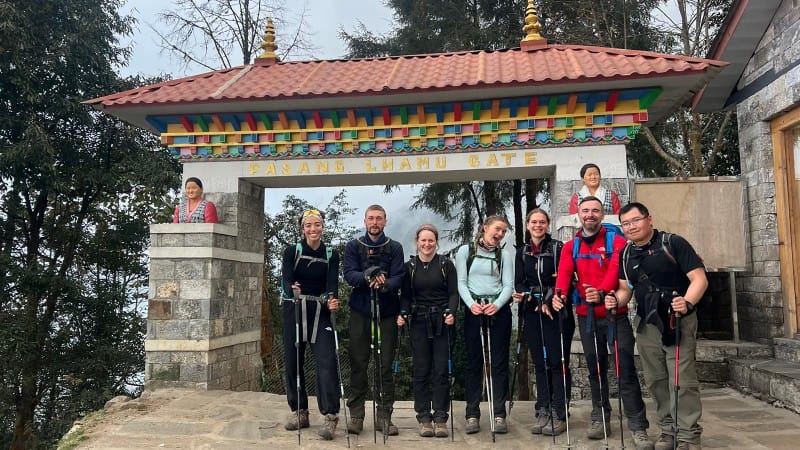
The way down through Namché to Lukla
“The path back is never the same path; you return with different eyes.” — Tenzin Palmo
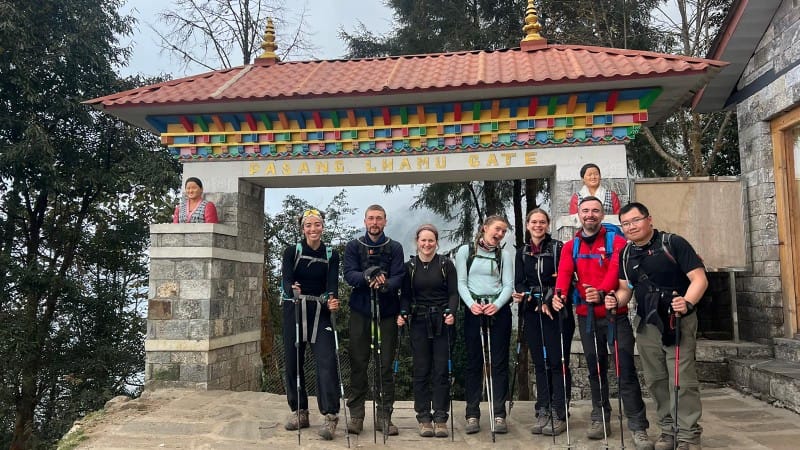
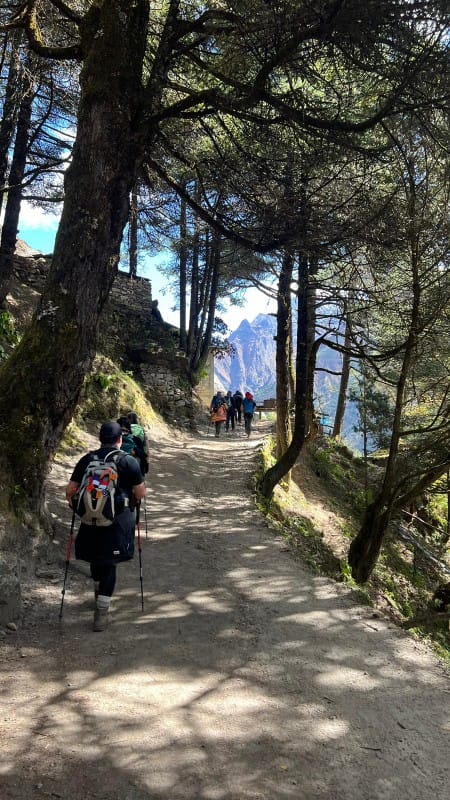
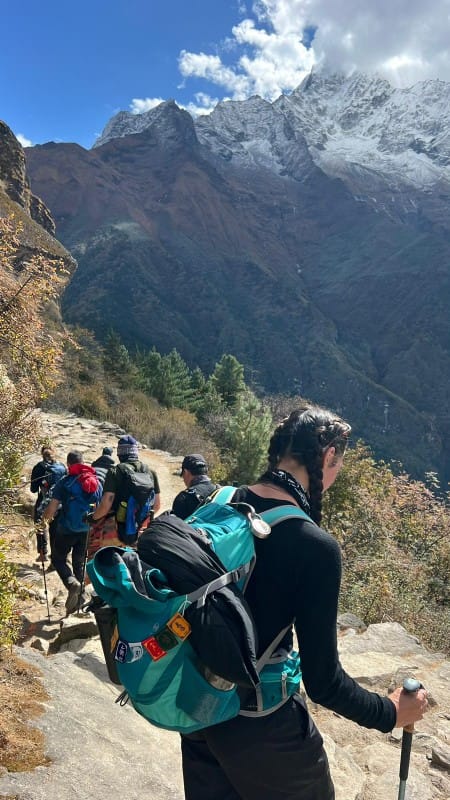
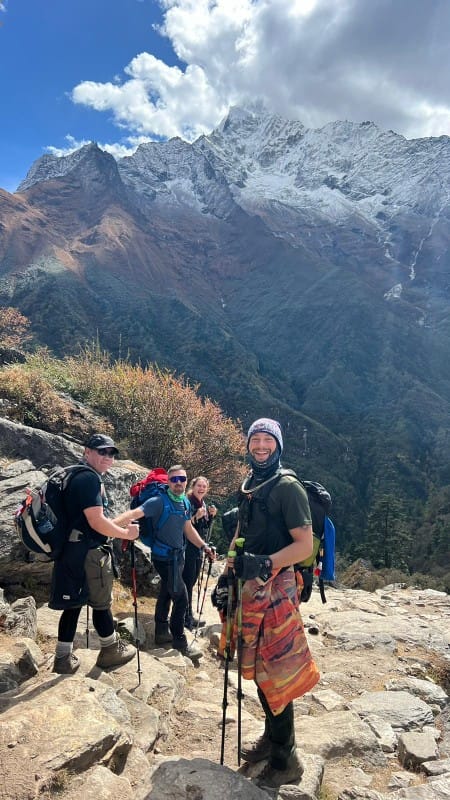
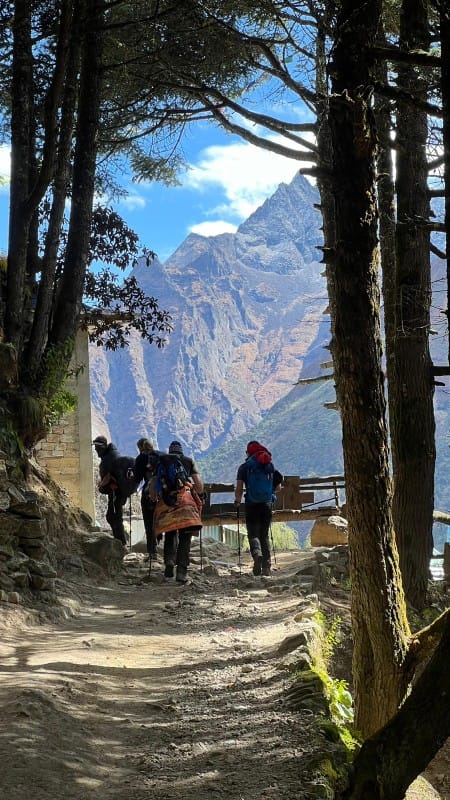
We started the hike at 6:30, stepping out into the freezing Himalayan morning. The air was sharp enough to sting the skin, biting into your fingers even through gloves. My left knee throbbed with every movement, fiery, dull, and relentless, making each step feel like a small negotiation with my own body. But we moved forward anyway. Slow, steady, determined. Today’s hike would stretch over 21 kilometers, all the way back to Namché Bazaar at 3440 meters.
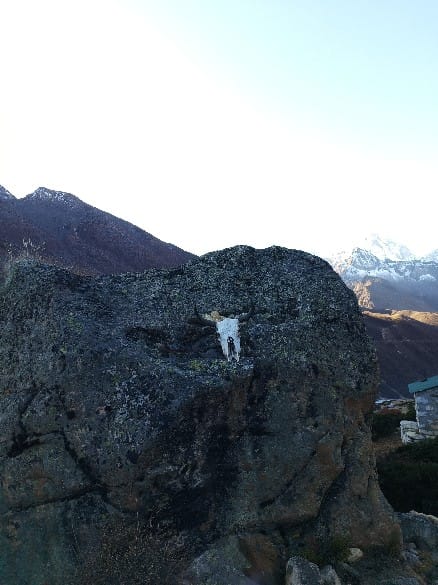
Only minutes into the trek, we passed a yak skull lying beside the trail. Bleached by sun and wind, hollow-eyed, staring into nothing. An omen. Whether it meant good or bad, I didn’t know, but it stayed on my mind as we walked.
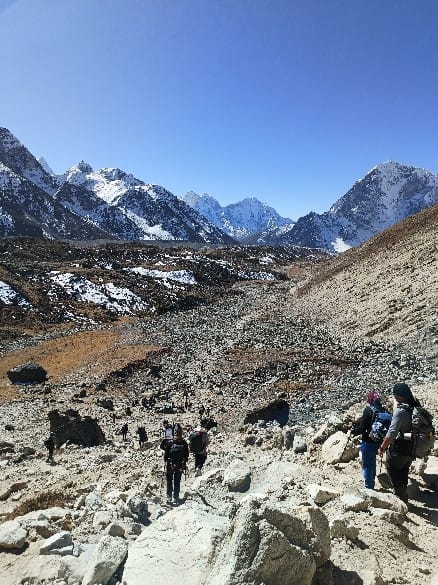
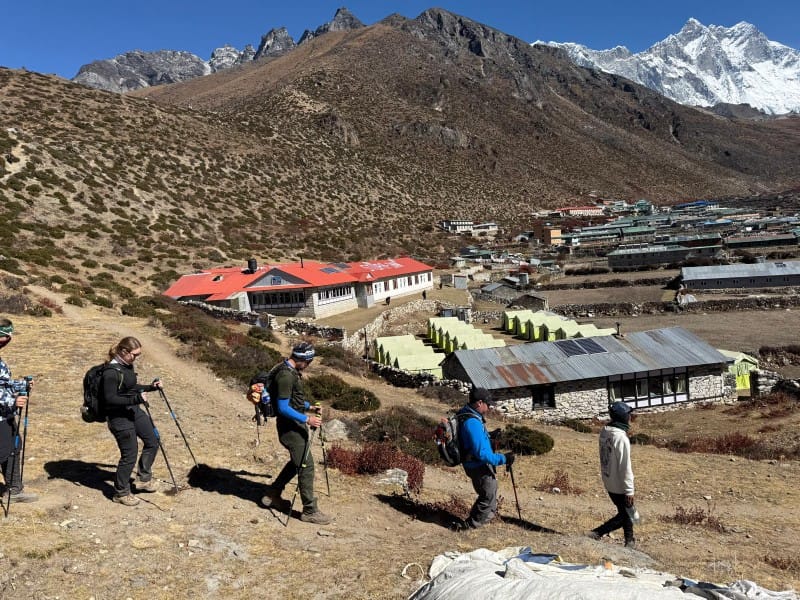
As the trail unfolded, the landscape transformed around us like shifting chapters in a story. The brittle brown grasses of the high altitude slowly gave way to patches of green. Eventually, entire grasslands spread across the slopes, and later, forests reappeared, trees we had longed for just days before. We passed the memorial site again, its stone towers and prayer flags fluttering in the wind.
Just a few days earlier, we had stood here struggling for breath, hearts pounding, fighting our way up the steep path. Now we watched newcomers pushing upward with the same grim determination, stopping often, hands on their knees, fighting for each step. It felt surreal to be on the other side of that struggle.
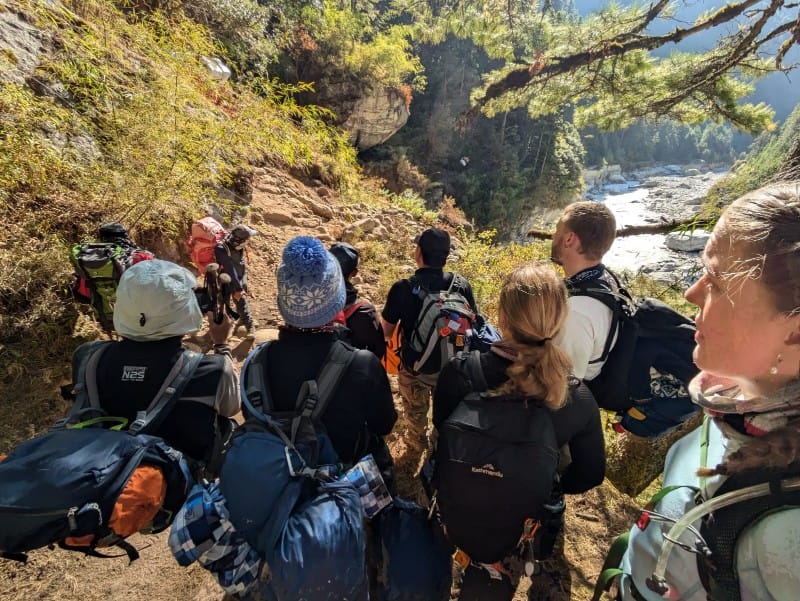
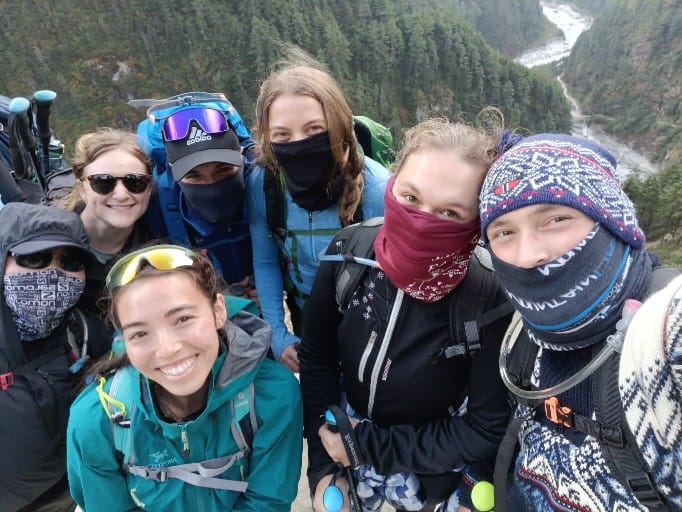
We stopped for lunch at 10:30 in the little bakery near the monastery. A familiar stop, warm and comforting. The further we descended, the easier breathing became. Strength returned, our lungs filling more easily with every hundred meters lost. My knee, however, worsened with every step. By midday, it felt like someone had wedged a burning stone in the joint.
At 17h, after hours of winding down the mountain, the trail made one final bend, and there it was, Namché. Spread across the mountainside, colorful roofs stacked like steps against the slope. It felt like seeing civilization again after weeks in the wilderness. Relief washed over all of us.
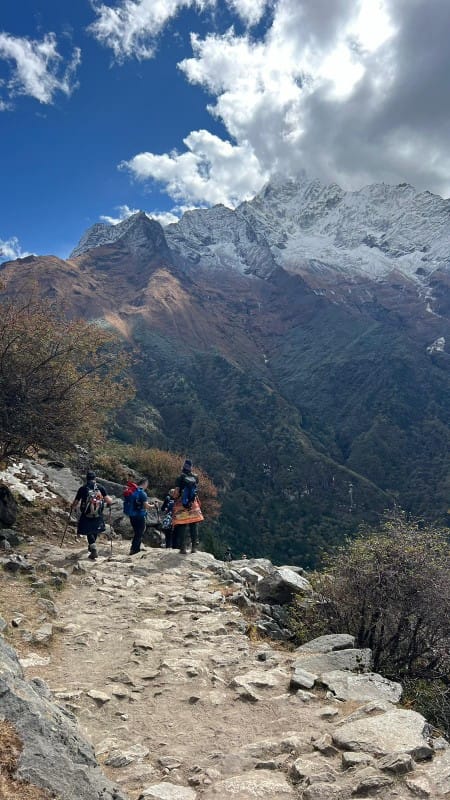
We reached the same teahouse we had stayed in earlier that week, put down our bags, and immediately ordered food. And then, finally, a hot shower. The best shower of my life. The water washed away layers of sweat, dust, and exhaustion that had coated my skin for days. It felt like returning to myself.
As we descended, I realized my senses were returning, too. Smells seemed sharper; food tasted richer; even the simple act of climbing a staircase no longer left me gasping for breath. I devoured three servings of Dhal Bhat, letting the warmth settle deep into my stomach like a hug from the inside, and washed it all down with a cold, Nepali Beer.
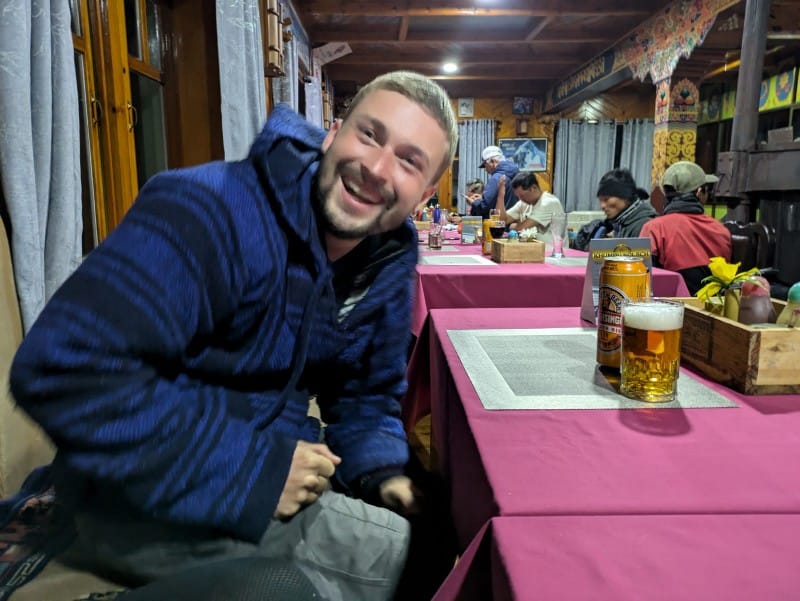
We played cards by dim light, laughter filling the room, and then drifted off to bed.
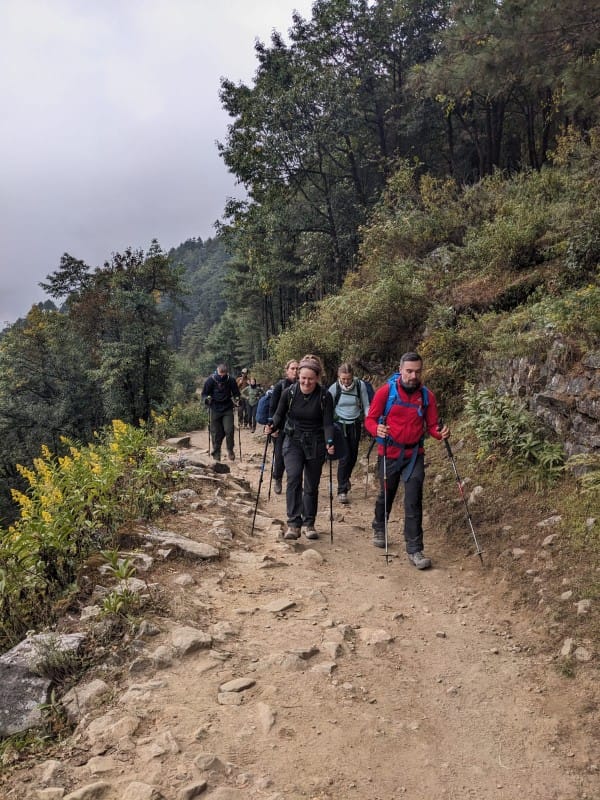
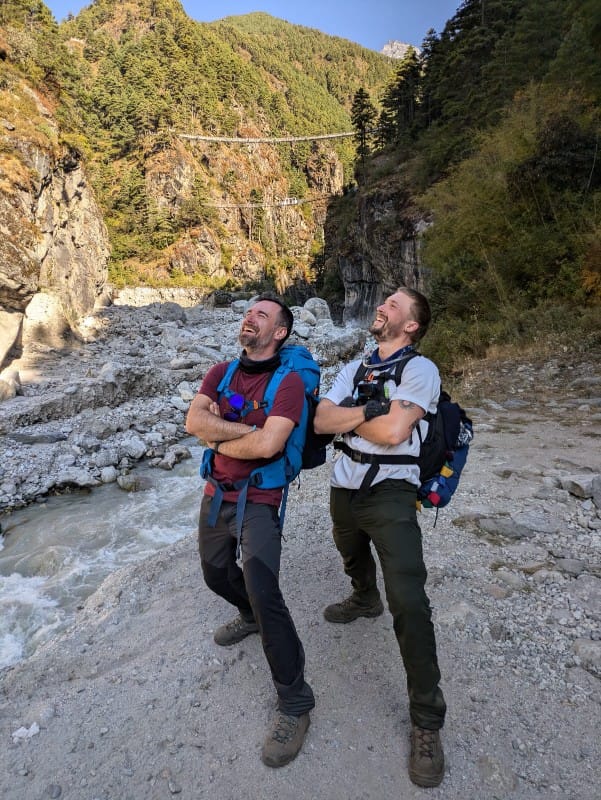
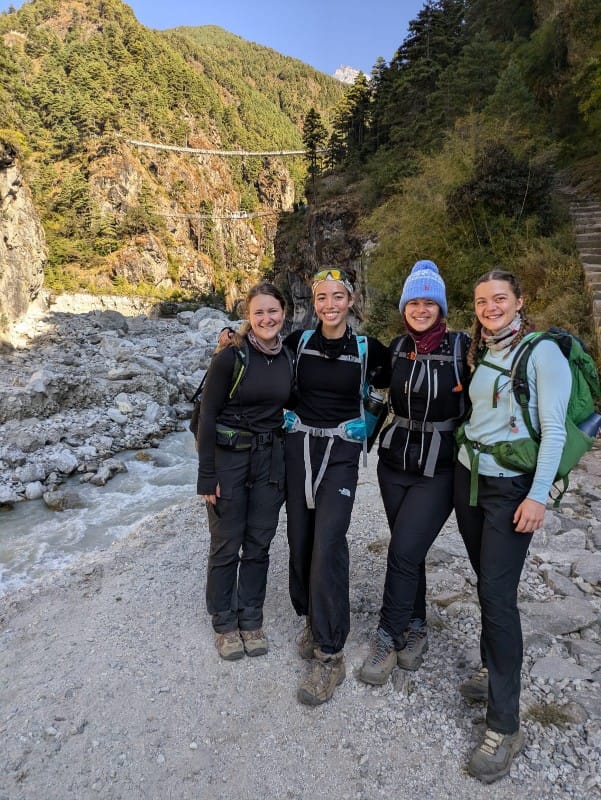
The following morning, we set out again, another nearly 20 kilometers. This part of the trail felt gentle in comparison, familiar and friendly. We walked the same path we had taken upward, but now every landmark felt like a memory: the long suspension bridges, the stone steps carved into the mountainside, and the legendary Hillary Bridge swaying above the river. Revisiting it all felt like closing a full circle.
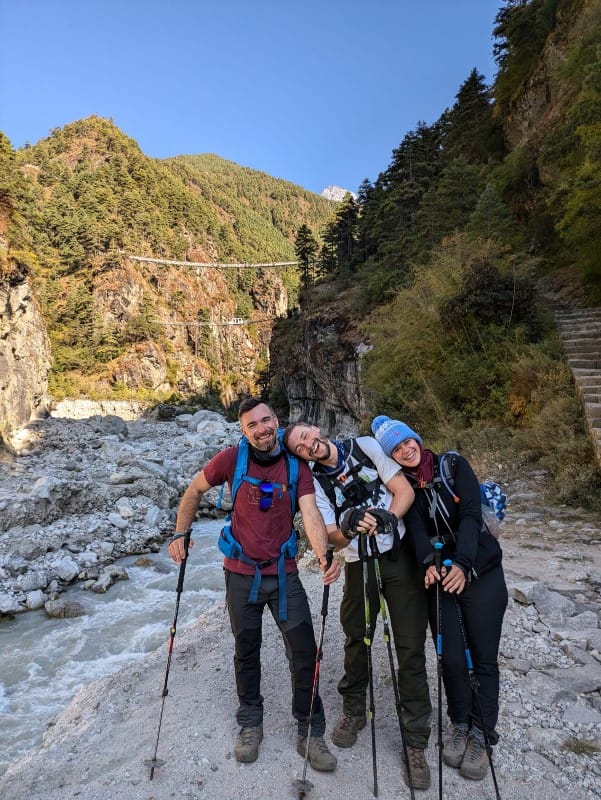
We arrived at our final teahouse around 17h. Dhal Bhat again, comfort in a plate. After eating, we gathered with the porters and thanked them sincerely for everything. In return, they placed white Nepali scarves around our necks. A traditional blessing for good luck and safe journeys. It was a quiet, meaningful moment.
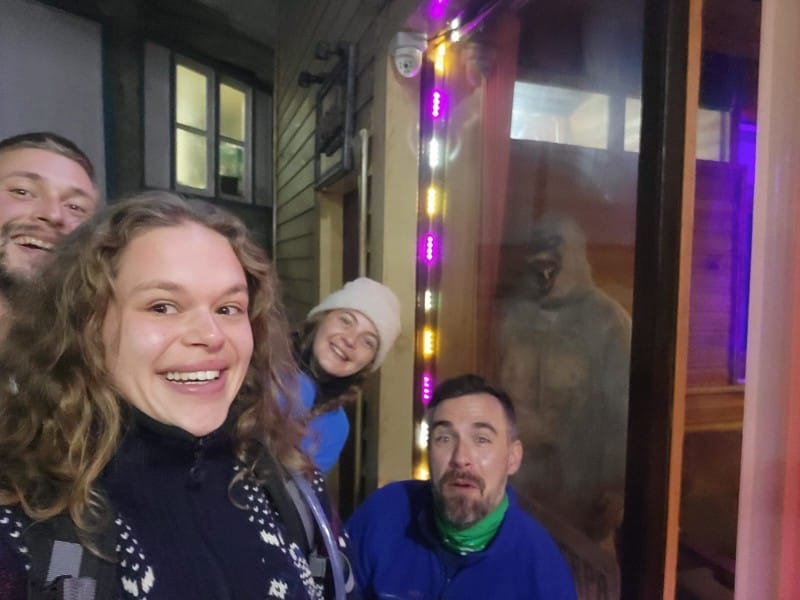
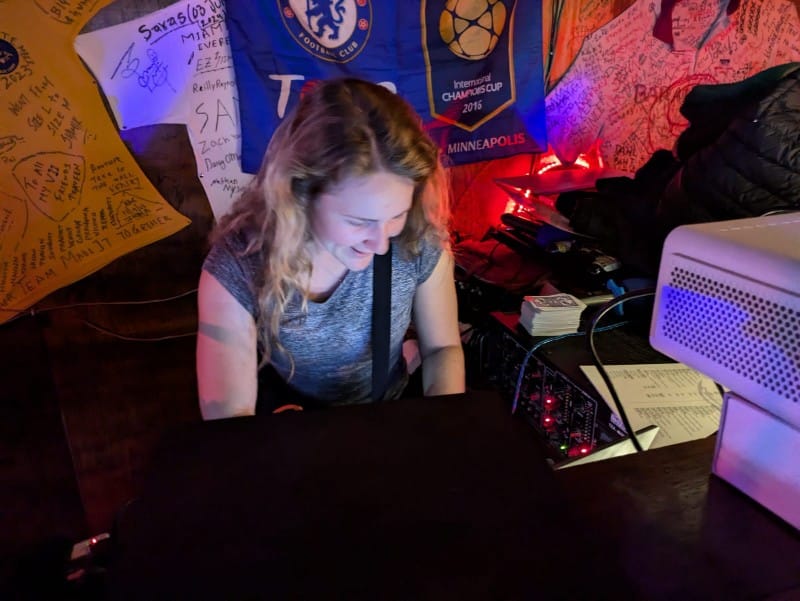
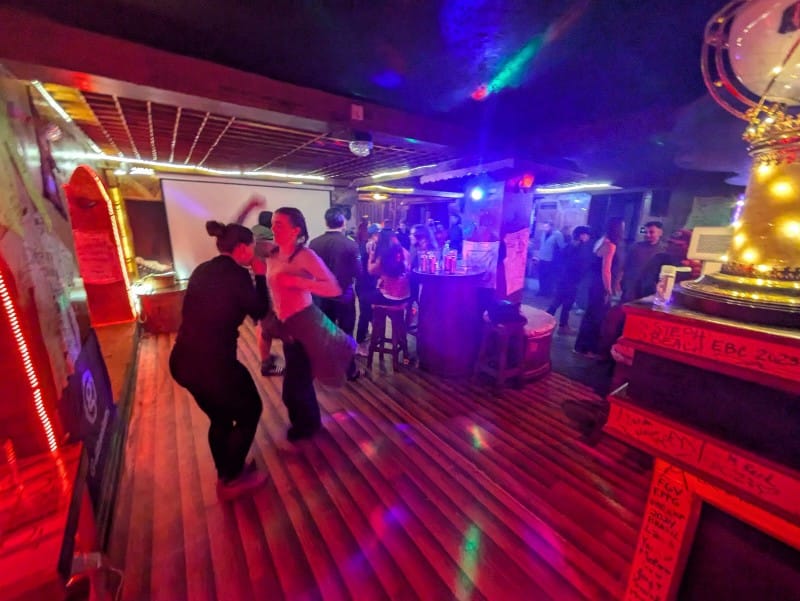
We danced that evening, celebrating our last night in the Himalayas. Exhausted but full-hearted. Bibek eventually sent us to bed at 21h, still feeling responsible for our well-being and still guiding us, even off the trail.
Tomorrow morning, early, we would fly.