The world's highest monastery
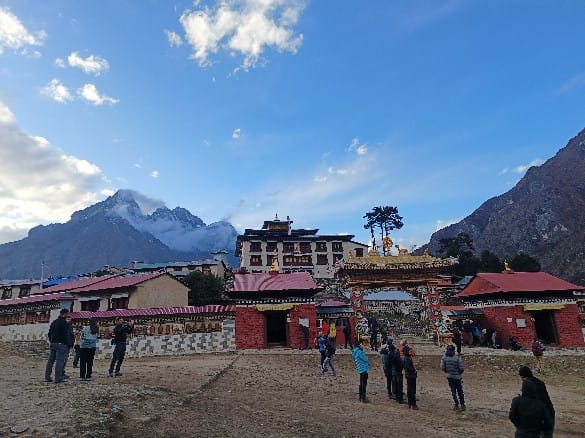
We visited the famous Tengboche Monastery. From afar, it looked like something out of a dream — a splash of red and gold nestled in the mist, surrounded by towering peaks.

“When you rise above the clouds, every breath becomes a prayer.”
— Anonymous (mountaineer’s proverb)
The alarm rang at six, a faint buzz beneath the distant hum of wind outside. The porters were already stirring; they had to leave by 6:30. Still half-asleep, we stuffed the last of our gear into the duffel bags and left them at the door. The air in the teahouse was cold and thin; you could almost see your breath when you spoke.
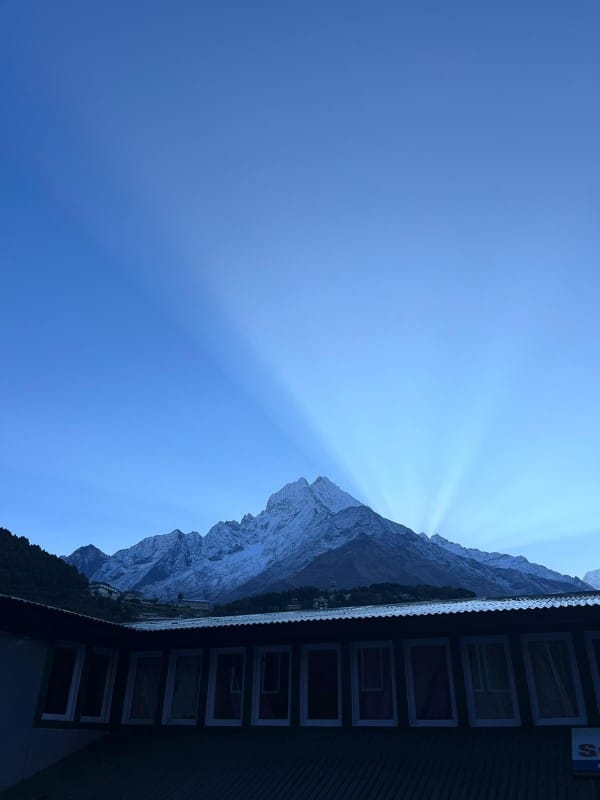
Downstairs, we warmed our hands around mugs of tea and played a few lazy rounds of Presidenten while waiting for the morning light to creep over Namché. By 8 a.m., the valley had begun to glow gold, and it was time to start the hike toward Tengboche.
Bibek, our ever-smiling guide, promised that today’s trail would be “mostly flat.” We all laughed later — mostly flat turned out to mean mostly uphill. The trail descended at first, going round the mountain rather than over it, which we did on the acclimatization day, but climbed almost immediately after. A steady ascent that pulled the breath from my lungs and set my heart pounding.
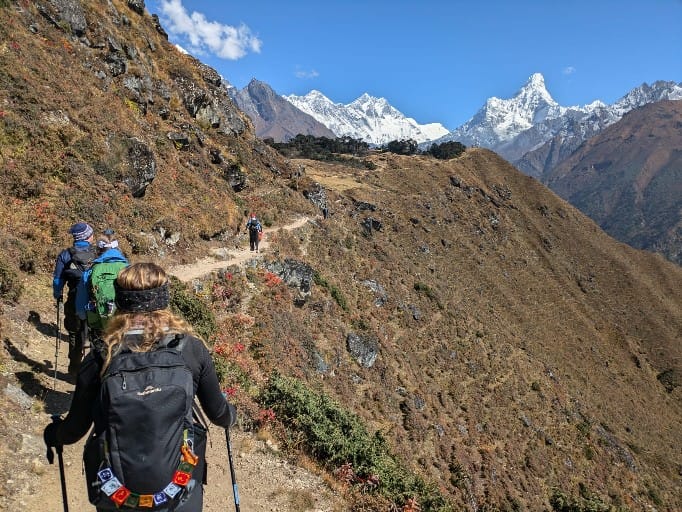
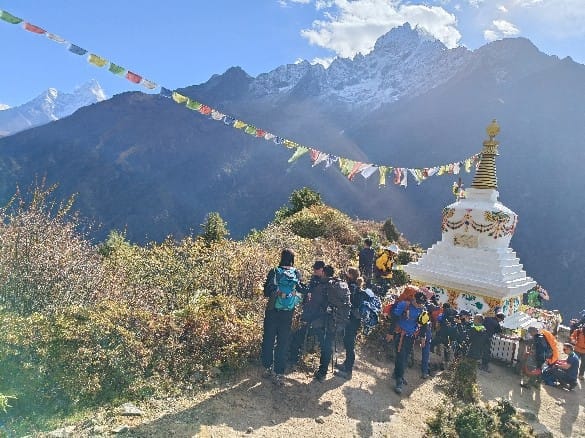
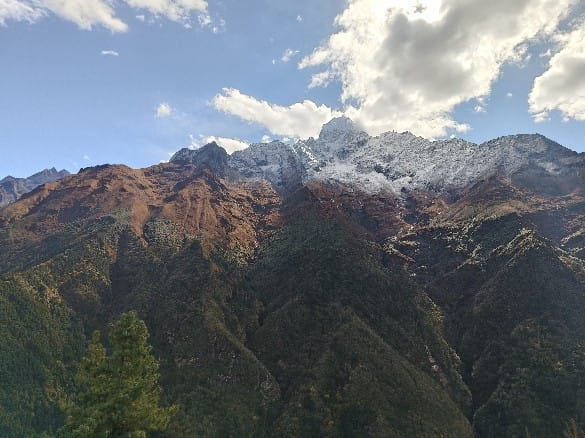
We passed a small shrine draped with prayer flags, their colors faded by years of wind and snow. The smell of pine filled the air as we descended toward the river, the sound of rushing water echoing through the valley. The suspension bridge swayed gently beneath our feet, high above a ribbon of icy turquoise water.
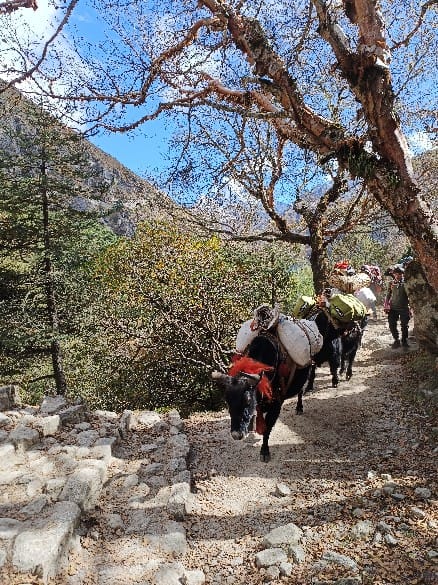
As soon as we crossed, the landscape began to shift — from soft grass plains to dense forest, then slowly thinning into a tundra of rocky earth and low shrubs. The air grew colder, the trees shorter, the silence deeper. At one narrow point on the trail, we had to step aside and let a line of yaks pass — shaggy, slow, and heavy-footed, their bells clanging dully as they trudged uphill. Bibek reminded us to give them space; one careless shove from a yak could easily send someone tumbling into the river below.
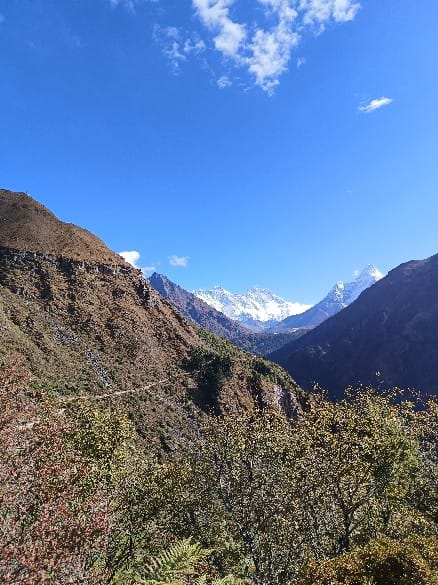
The climb after the bridge was brutal — steep, relentless, each step harder to pull than the last. The higher we went, the more precious every breath became. When we finally reached Tengboche, we were exhausted, our faces flushed and damp with sweat despite the cold.
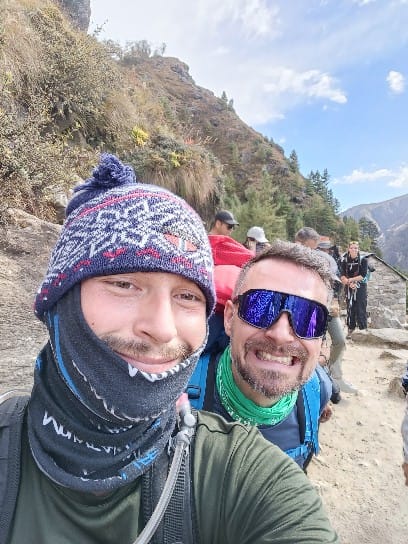
At the teahouse, we changed into dry clothes, grateful for even the simplest comfort. The rooms here were smaller, colder — the air smelled faintly of smoke and damp wool. The beds were little more than wooden planks with thin blankets, and the bathroom carried the sharp chill of mountain air mixed with the stench of urine. But none of that mattered. We had made it.
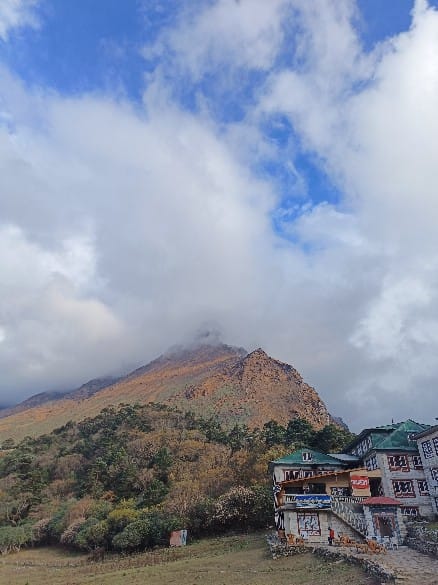
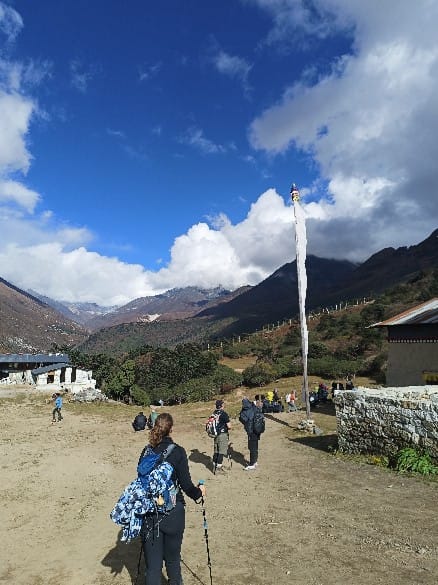
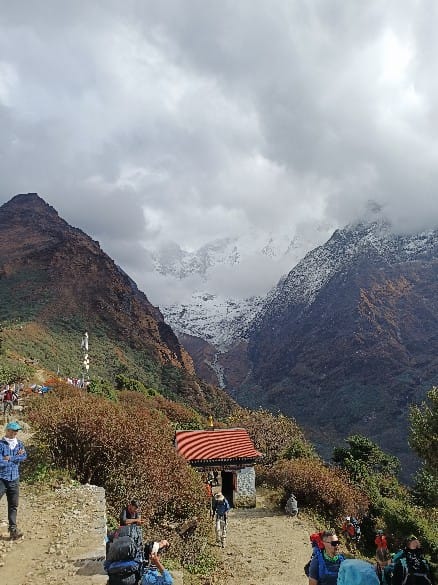
After tea, we visited the famous Tengboche Monastery. From afar, it looked like something out of a dream — a splash of red and gold nestled in the mist, surrounded by towering peaks. The mountains loomed like ancient guardians, their tops hidden in cloud. Mist curled through the courtyard as if the valley itself was breathing.
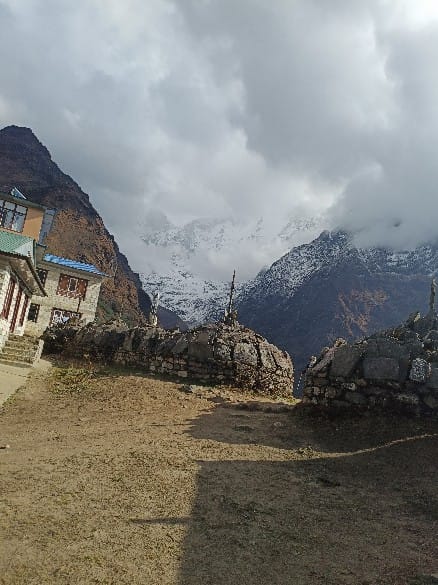
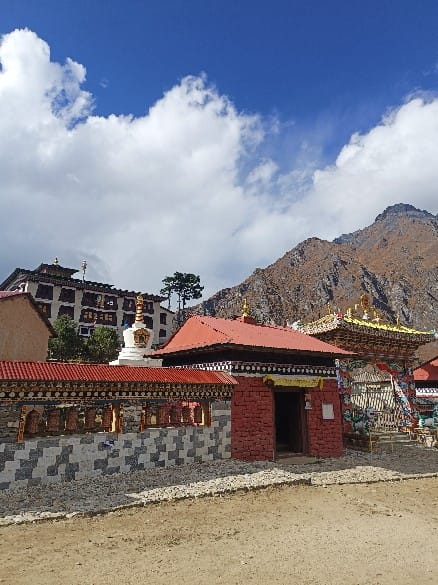
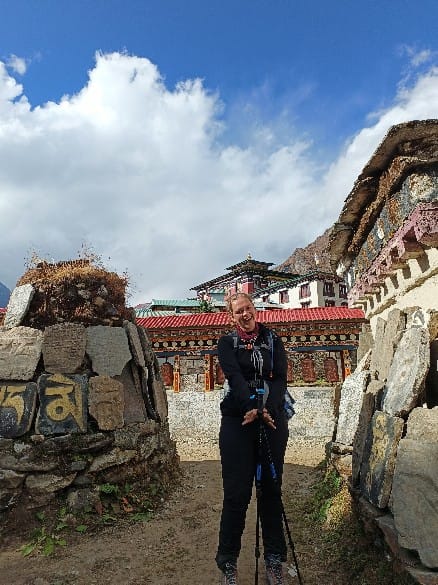
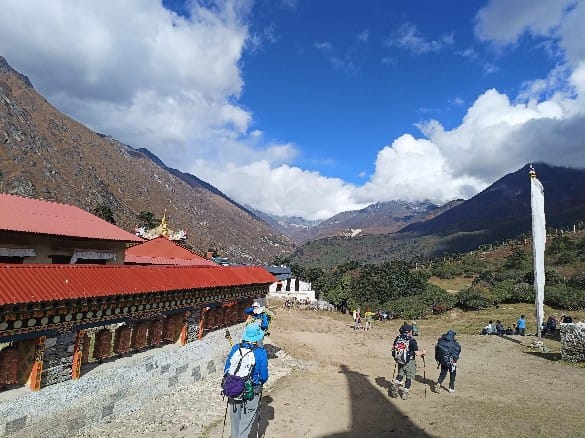
We entered through an ornate gate and climbed the stone steps, leaving our shoes at the threshold before stepping inside. The air was heavy with the scent of incense and butter lamps. The chanting began to wrap around us immediately, deep, rhythmic, echoing through the wooden halls.
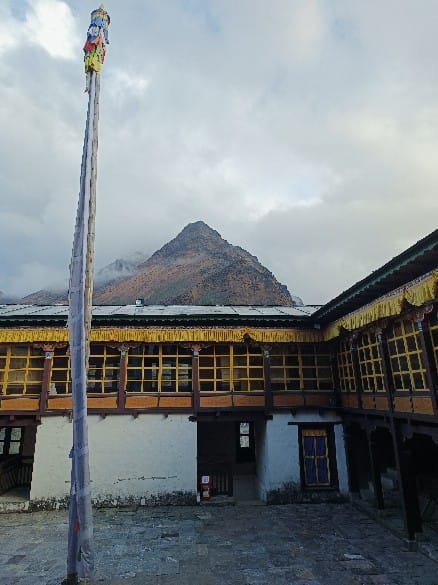
Monks sat in two long lines, facing each other, their dark orange and crimson robes made of thick, coarse fabric, likely yak wool. They recited from open scripts laid before them, voices rising and falling in mesmerizing cadence. Every minute or so, a small bell chimed. Then came the deep vibration of a gong, powerful enough to tremble in your chest, or the low drone of an enormous horn that made the air itself quiver.
A young apprentice tiptoed between them, refilling cups with steaming tea. The hot tea was in sharp contrast with the otherwise icy room. At the front stood a golden Buddha, overlooking everyone in the room. Serene and radiant beneath painted walls depicting dragons, spirits, and scenes from the Buddha’s life. The colors saffron, turquoise, and deep green glowed in the dim light.
It was a different world from the temples of Cambodia. Colder, darker, more mysterious, yet very similar. The same reverence filled the air. In both places, devotion felt tangible, like something you could touch.
When we stepped back outside, the mist had thickened and the sun had set. Prayer flags fluttered in the wind. The sound of chanting still echoed faintly behind us, carried on the breeze through the valley.
Back at the teahouse, the stove in the common room was finally lit. We crowded around it, hands outstretched to the warmth, watching the fire eat slowly through the logs. There are no heated rooms in these mountain lodges; only the simple comfort of shared warmth.
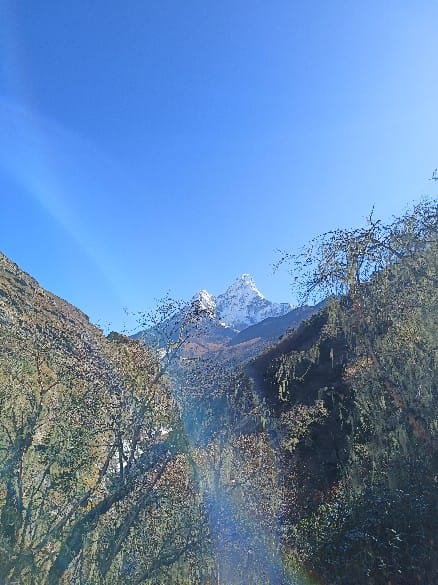
The trek was beginning to take its toll. Muscles ached, heads throbbed, and words grew few. Once the heat from the stove started to fade, we all retreated quietly to our rooms, curling under thick blankets. Outside, the night swallowed the mountains. The full moon lit the snow-covered mountain, standing guard. Inside, the world grew still.
Tomorrow, we climb higher.